Why Doesn't My Second Location Run Like My First?
A second location runs differently from the first because the standard that made the first one good was never actually written down anywhere a new manager could find it, so that manager rebuilds it from memory and calls whatever they land on normal. Search a restaurant operator forum and the same sentence shows up over and over in slightly different words: "my second location doesn't run like my first." It's rarely about the building, the neighborhood, or the staff being worse. It's that everything the first location does well, the exact braise time, the way a server answers an allergy question, the way the walk-in gets organized, lived in one building and in a handful of people's heads, and none of it traveled with the lease.
Staff turnover makes this worse than most owners expect. Accommodation and food services ran a 65% total separations rate in 2025, close to double the 43% average across every industry the federal government tracks (BLS/FRED, JTS7200TSR). At that pace, a "standard" that only exists as tribal knowledge gets diluted every few months as it passes from person to person, the way a story changes with each retelling. A written standard doesn't dilute the same way. A person can still misread it, but at least everyone is misreading the same page.
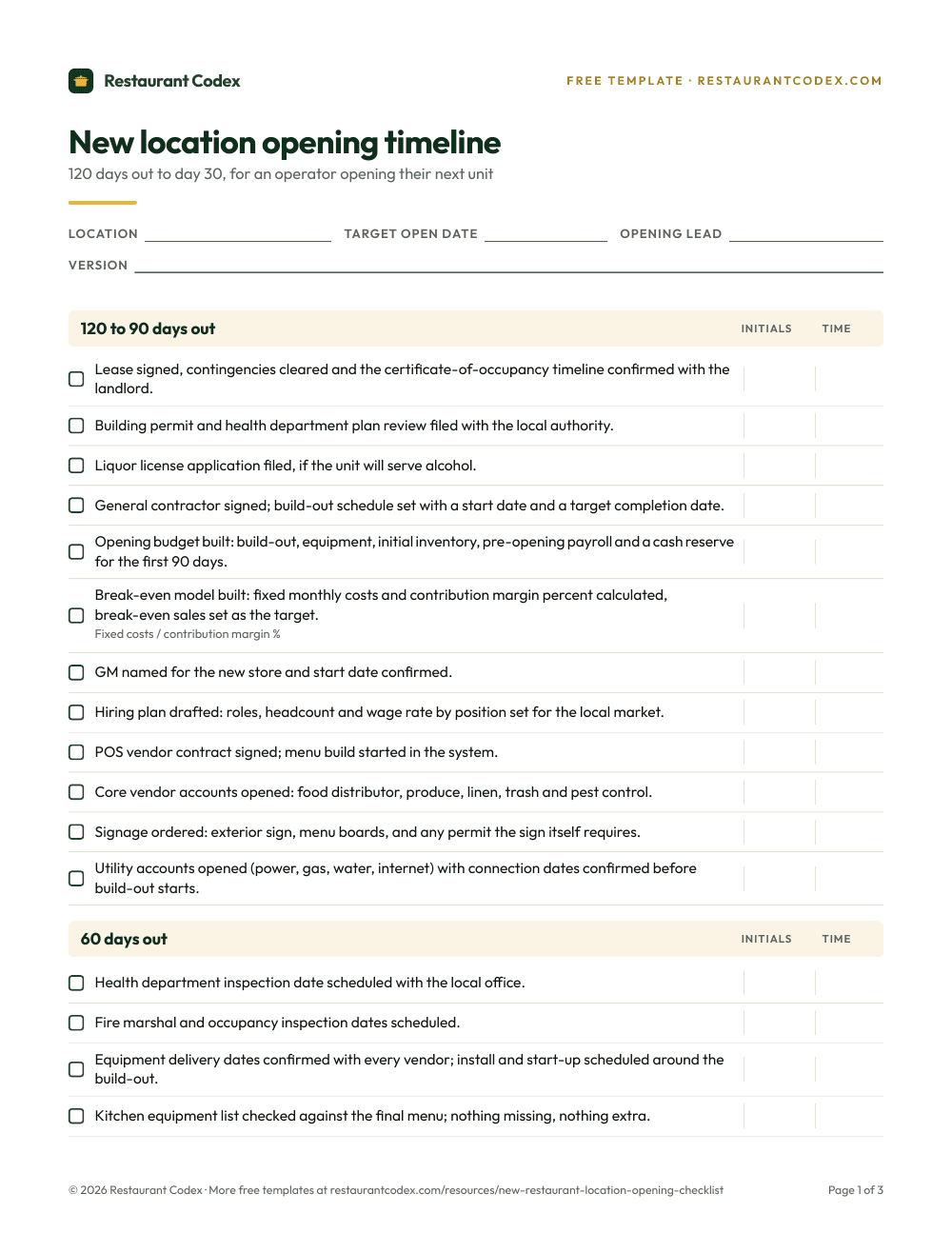
This guide isn't about running a multi-location group in general, staffing models, vendor contracts, the weekly ownership meeting, that's covered in our guide to running a multi-location group. This one is narrower: why the output at location two doesn't match location one, and what closes that gap. Opening day matters more than owners plan for, which is why a written opening sequence belongs in the file before the doors do.
What Has to Be Identical Across Locations, and What Can Vary?
What has to be identical is anything a guest expects to match and anything with a safety or legal consequence attached to it; almost everything else can flex by site without hurting the brand. Cold holding has to stay at 41°F or below and hot holding at 135°F or above at every location, the same two numbers regardless of concept, state, or how long the site has been open (FDA Food Code 2022). Allergen answers have to match exactly, because the FDA recognizes 9 major food allergens, sesame became the ninth on January 1, 2023, and a recipe file at one site still built around eight allergens is already wrong, not just outdated (FDA, FASTER Act).
Past safety, the identical list stays short on purpose: core recipes and plating, cash and close-out procedures, the words used on an allergy question, and the dollar amount a server can comp without a manager's sign-off. On the legal question people ask constantly, no general law requires commonly owned restaurants to share a menu. What usually forces sameness is a franchise agreement between a franchisor and a franchisee, a private contract, not a food-safety statute. An independent owner with two locations is free to run two different menus; keeping them identical is a choice, not an obligation.
| Usually identical everywhere | Usually fine to vary by site |
|---|---|
| Core recipes, weights, and plating | A local special built from approved ingredients |
| Allergen script and allergen data | Staffing model and shift structure |
| Cold and hot holding temperatures | Which vendor fills this week's order |
| Cash handling and comp authority | Prep volumes sized to that site's covers |
Everything in the right-hand column belongs to the local manager. A downtown lunch rush and a strip-mall dinner rush don't run on the same clock, and pretending they do usually makes both worse, not more consistent.
How Do You Stop Two Managers From Keeping Two Versions of the Same Recipe?
You stop two managers from keeping two versions of the same recipe by making one file the only file that counts, owned by one person, with every change dated and reasoned instead of made quietly on the line. The failure mode is familiar to anyone who has run more than one site: a cook swaps an ingredient because the vendor ran short, it works fine that night, the manager likes it, and nobody ever writes it back into the master. Six months later, one manager's laminated card says one thing and the other manager's card, updated after a staff meeting nobody else attended, says something close but not the same. Both think they're right. Neither one is checking.
A restaurant forum post about multi-location management described the same pattern from a different angle: managers at different sites writing their own "new" lists without ever throwing out the old recipes those lists were supposed to replace. Old and new both stay in circulation, and whichever card happens to be taped to the wall that week becomes the truth for that shift.
The fix isn't a stricter memo, it's fewer copies. One person or role owns the master, usually the chef, a kitchen lead, or a corporate culinary owner in a larger group. A change gets a version number and a one-line reason, not a verbal update passed down the line. Anyone else with a genuinely better idea routes it through that owner before it reaches a cutting board, and the old version gets pulled from circulation the same day the new one goes up, not eventually.
What Is a Spec, and How Does Portion Control Keep Locations Consistent?
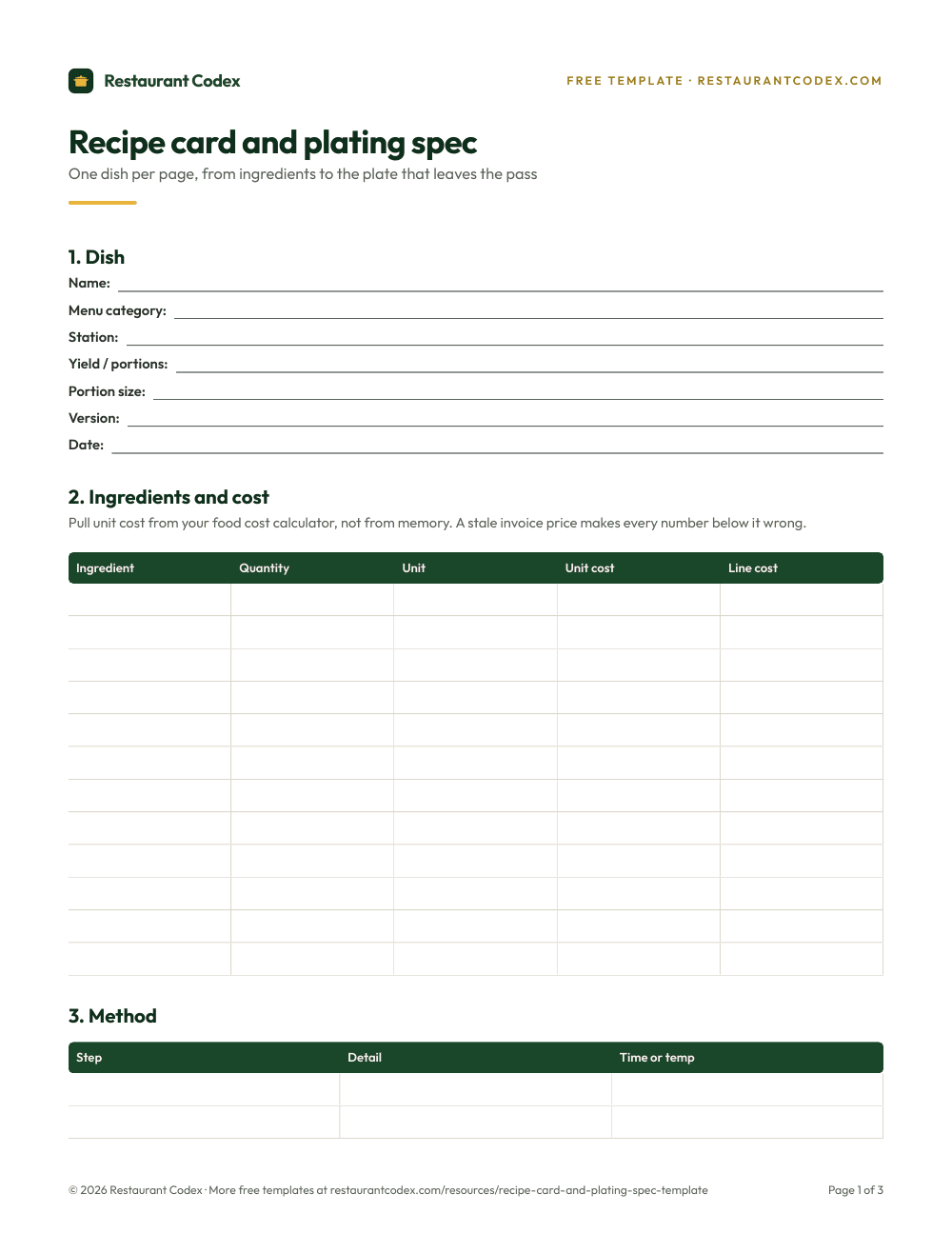
A spec is the written version of a dish, exact weights, method, plating, and allergens, that turns "how Maria makes it" into something any trained cook at any location can reproduce the same way. Without one, portion control depends entirely on whoever is holding the scoop that shift. With one, a six-ounce patty is six ounces at every site, a four-ounce ladle of sauce is four ounces everywhere, and a plate photo tells a new hire exactly what "done" looks like instead of leaving it to guesswork.
Portion drift is quiet and it's expensive in both directions. A location running slightly generous portions eats margin nobody notices until a monthly food-cost report comes in high with no obvious cause. A location running slightly stingy portions saves a little money and slowly trains its regulars to expect less, which shows up as softer repeat visits long before it shows up on a spreadsheet. Neither direction gets caught by taste alone, because both versions still taste fine. They just aren't the same.
A spec sheet only works if it's actually at the station, not filed somewhere a cook has to go looking for it. Laminated cards, a photo taped by the pass, or a page pulled up on a shared screen all beat a binder in a manager's office that gets consulted once during training and never again.
How Do You Verify Consistency Across Locations Instead of Assuming It?
You verify consistency by checking output directly, spot checks with photo evidence and a weekly scorecard comparing every location on the same handful of numbers, instead of trusting that a shared menu and a shared name mean a shared result. Assuming sameness is how a six-month drift goes unnoticed; a location's numbers can look fine on their own and still be quietly wrong compared to their sister store.
Spot checks don't need to be a surprise inspection to work. A timestamped photo of a plated signature dish, sent the moment it leaves the pass, catches most drift as well as a manager standing over the cook's shoulder, and it scales to five locations the same way it scales to one. Compare the photo against the spec sheet, not against memory of what it looked like last time someone checked.
A weekly scorecard does the same job at the level of numbers instead of plates: food cost against food cost, a checklist completion rate against a checklist completion rate, the same eight to ten figures for every location on one screen. Full-service food cost typically runs 28% to 35% of the menu, averaging 32.4% nationally in 2026 (National Restaurant Association data via WhippleWood CPAs). A location sitting well outside that band on a menu identical to its sister store isn't a pricing mystery, it's usually a spec problem, a waste problem, or a recipe that quietly stopped matching the file.
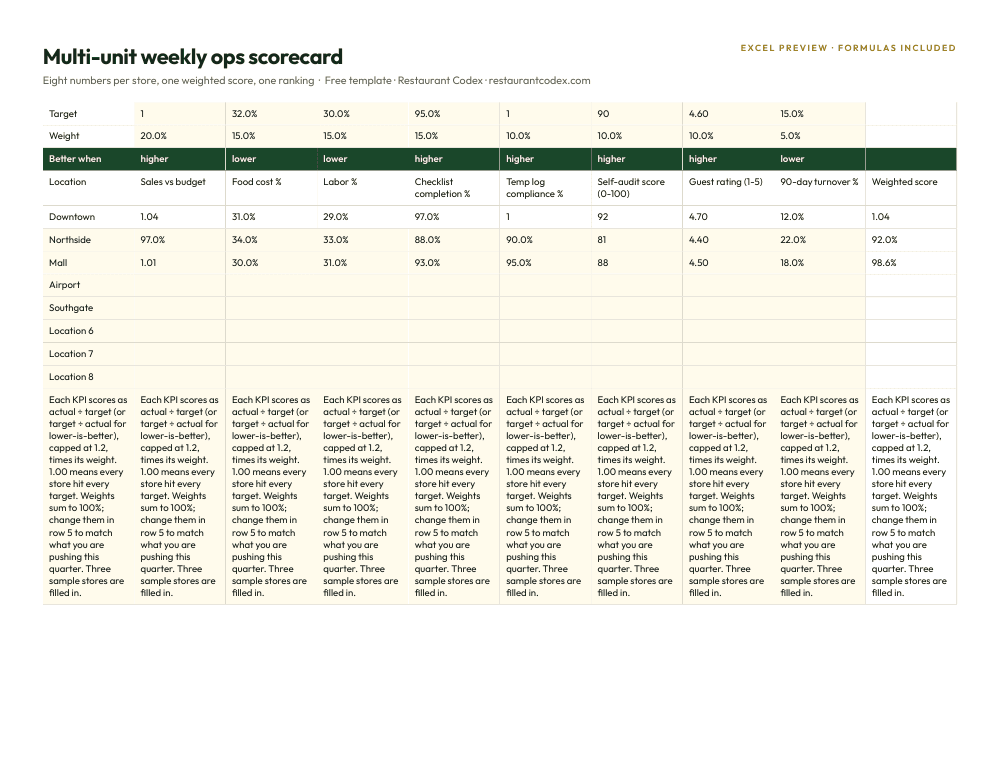
The scorecard's real value isn't the number itself, it's the comparison. One store's food cost means little in isolation. The same number sitting three points above every other location running the identical menu means something specific, and it means it weeks before it would show up as a pattern anyone noticed by feel.
What Do You Standardize First If You Only Have Time for Three Things?
If you can only standardize three things before opening a second location, standardize the recipes and specs, the food-safety temperatures, and one weekly number everyone gets compared on, and let almost everything else wait. Recipes and specs come first because they're the entire reason a guest chooses either location expecting the same meal; get this wrong and nothing else you standardize matters as much. Cold and hot holding temperatures come second because they're not a brand preference, they're the FDA Food Code, 41°F or below and 135°F or above at every site without exception. A weekly comparison number, food cost, checklist completion, whichever matters most to your concept, comes third because it's the only thing that tells you whether the first two are holding or slipping, on a schedule instead of by accident.
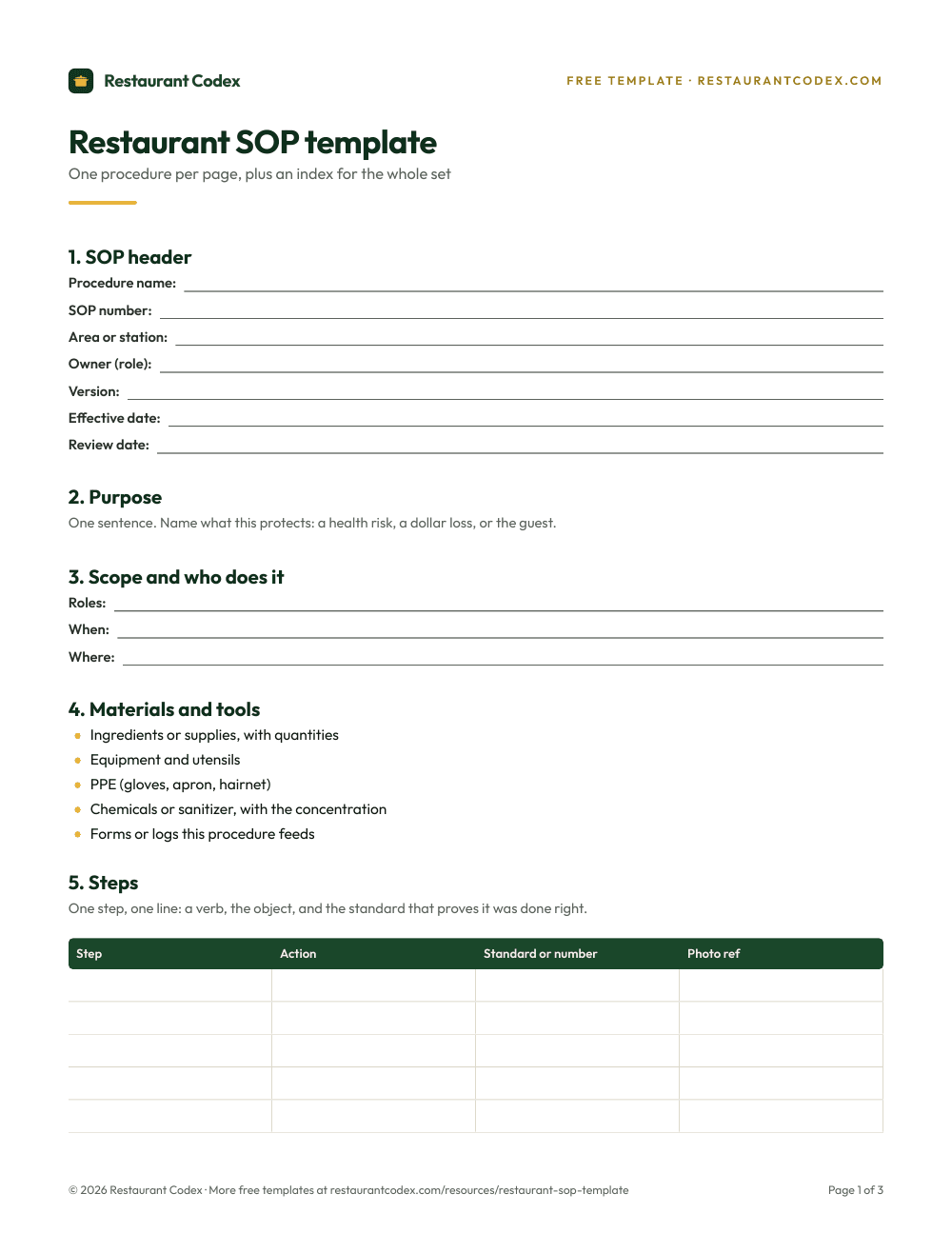
Everything past those three can wait a quarter without real damage: a formal SOP library, a full training curriculum, a detailed vendor policy. They're worth building, just not before the three things a guest can actually taste or a health inspector can actually cite. A second location that nails those three in its first month and adds the rest gradually will outperform one that tries to launch a complete operations manual on day one and gets none of it followed.
Where Local Autonomy Is Correct, and Where It's Just Drift
Local autonomy is correct when a decision depends on facts only that location has, staffing to its own volume, sourcing from a vendor that actually serves that area, sizing prep to its own covers, and it's just drift when the same decision quietly changes what the guest gets. A manager who staffs Tuesday lunch lighter than Friday dinner is reading their own building correctly. A manager who starts using a different sauce recipe because their walk-in runs a different layout is not adapting, they're substituting, and the guest has no way to know which location they walked into.
The test that separates the two is simple to state and worth applying out loud: does this decision change what's on the plate, on the receipt, or on the safety log, or does it only change how the kitchen gets there. A different prep schedule that lands on the same finished dish is autonomy. A different finished dish is drift, even when the manager who made the change has a genuinely good reason. Prep volumes, staffing patterns, and local vendor relationships belong to the site. Recipes, specs, and safety numbers don't, no matter how good the local reason sounds in the moment.
Where Restaurant Codex Fits
Restaurant Codex keeps one recipe and spec file per dish, versioned, so a change publishes once and every location works from the same page instead of a laminated card someone updated after last Tuesday's staff meeting. Spot checks attach a photo and a timestamp directly to the task that required them, and the weekly scorecard puts every site's numbers on one screen instead of a spreadsheet a manager rebuilds from memory the night before a meeting. None of that replaces good managers. It just means two good managers running the same menu are actually running the same menu.
Restaurant Codex
The same checklist, on every phone, with photo proof
Restaurant Codex runs this template as a live task with timestamps, photos and one view across every location. Bring it to a 30-minute working session and we'll set it up on your real operation.
By the Restaurant Codex team
Written with operators who run multi-location restaurant groups. Reviewed against the FDA Food Code and the sources listed below.
Sources
- FDA, FASTER Act: Sesame as the 9th Major Food Allergen
- National Restaurant Association 2026 data via WhippleWood, Financial Benchmarks for Restaurants
- FDA Food Code 2022: cold holding, hot holding and two-stage cooling of TCS food
- FRED (Federal Reserve Bank of St. Louis), Total Separations: Accommodation and Food Services (JTS7200TSR)