When Is a Restaurant Ready for a Second Location?
A restaurant is ready for a second location when the first one runs on written standards and a real number, not on the owner's presence, for a stretch long enough to prove it wasn't a lucky quarter. That's a specific, checkable condition, not a feeling, and most owners who open too early skip the checking and go straight to the feeling: the first store "feels" steady, a space becomes available, and the lease gets signed on momentum instead of on numbers.
The honest version of this test has five parts, and all five have to hold at the same time, not just the one that happens to look good this month.
| Readiness signal | How to measure it | Threshold to want before you sign |
|---|---|---|
| The first location runs without you on the floor every day | Weekly numbers, labor, food cost, checklist completion, stay in range across weeks when you're not there daily | A real stretch, 90 days or more, not one good week |
| Prime cost is under control | Labor plus cost of goods, as a percent of revenue, tracked monthly | At or under 60% to 65% for a full-service concept, most months (Restaurant365) |
| A GM can run a full week alone | A stretch where you were genuinely gone, real travel, not a long weekend, and the numbers held | At least one multi-week stretch |
| Recipes and procedures are written, not remembered | Core recipes and the opening and closing sequence have a standard on paper or in a system | Every core recipe and both sequences, not "most of them" |
| Cash to cover a slow ramp | Reserve beyond the build-out and opening inventory budget, in months of the new site's fixed costs | Sized to the ramp curve, not a round number that sounds safe |
Prime cost is the fastest of the five to check, because it's one number already sitting in a P&L you already have. Full-service prime cost should run 60% to 65% of revenue, per Restaurant365, and a location sitting inside that range for most of a year isn't guessing, it's demonstrated. A location that's been outside it for most of the last two quarters has a systems problem that a second location will only multiply, not fix.
The harder signal to fake is the first one: whether the location actually runs without you walking it every day. Our guide to making a restaurant run without you goes through exactly what that takes: written standards, a GM with real decision authority, and a weekly review that catches drift the daily checks miss. If you haven't tested all three by actually leaving, for real, for at least a couple of weeks, you haven't tested readiness. You've tested whether the staff can handle a normal Tuesday with you one phone call away.
How Much Does a Second Restaurant Location Cost?
A second restaurant location costs the same range as the first one did, roughly $175,000 to $750,000 depending on concept and size, with the build-out itself running $100 to $800 a square foot, as listed on Square's restaurant-cost page in March 2026. Nothing about having done this once makes the contractor cheaper or the walk-in faster to deliver. What changes the second time is that you already know which mistakes to avoid, not that the number shrinks.
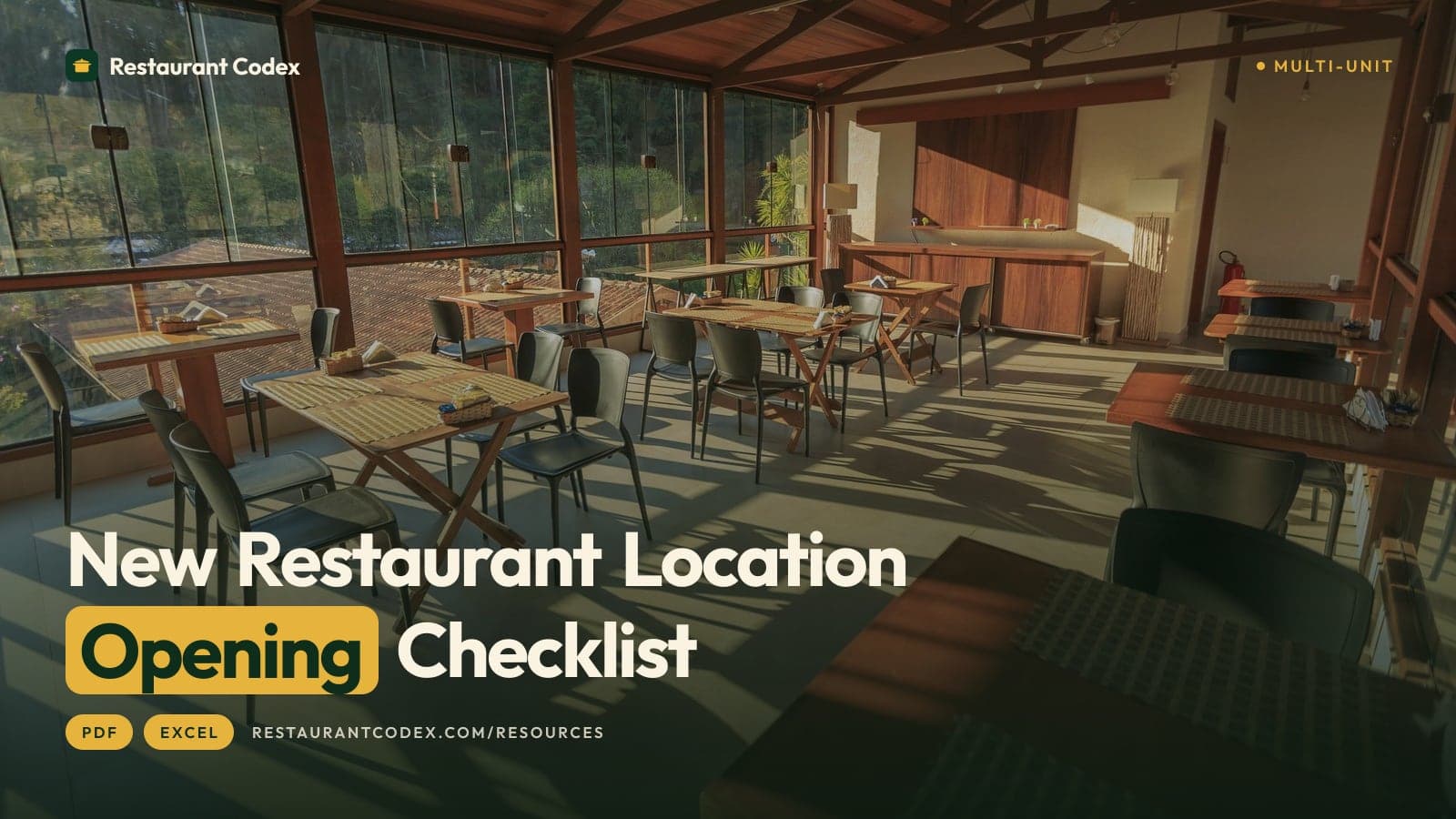
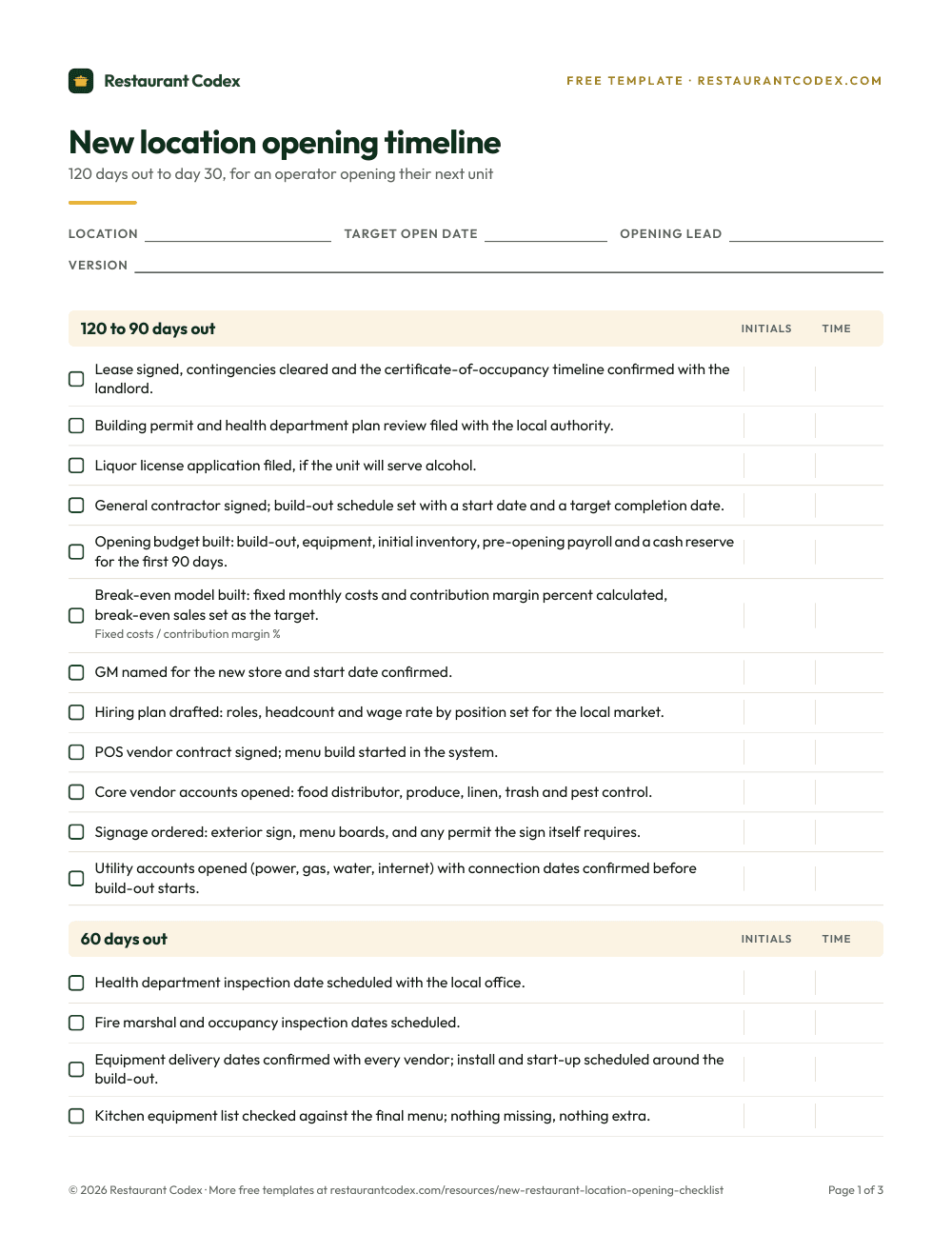
Our new location opening checklist breaks that range down by concept, quick-service, fast-casual, full-service, and walks through the 120-day timeline permits and equipment orders actually need. Worth reading before you lean on a contractor's verbal estimate for a number you're about to borrow against.
The number that gets skipped is the one after the build-out: the cash to cover the gap between opening day and the day the new location's sales actually clear its break-even point. 42% of U.S. restaurant operators said their restaurant wasn't profitable in 2025, per the National Restaurant Association's 2026 State of the Restaurant Industry report, and a second location doesn't start profitable. It starts at zero covers and climbs, which is a cash problem before it's ever a P&L problem. The worked example below puts a real number on what that climb costs to carry.
What Breaks When You Open a Second Location?
What breaks first when you open a second location is the owner's attention, and everything else on this list is really a symptom of that one thing splitting in half. You can only walk one floor at a time, and the floor you're not walking is the one where the small corrections that used to happen automatically, a portion creeping up, a side-work task skipped, stop happening at all.
Four specific failures show up often enough to name. Recipes drift first, because the standard that lived in your head or in a manager's muscle memory doesn't travel with the lease; restaurant consistency across locations covers exactly how that drift starts and what actually stops it. Your best people get pulled to open the new site, usually the right call for the opening and the wrong call for location one, which just lost whoever was quietly catching problems nobody wrote down. Purchasing doubles in effort before it doubles in volume: two vendor relationships, two delivery schedules, two sets of invoices to check against two pars, when you were used to doing this once. And communication slides into a group chat, because it's fast, until a decision that mattered is three scrolls up in a thread nobody can search a month later.
Turnover makes all four worse at once. Accommodation-and-food-services separations ran about 65% in 2025, close to double the 43% all-industry rate (BLS, Job Openings and Labor Turnover Survey; FRED, JTS7200TSR), so the person who moved to open your second location and the person who's supposed to replace them at the first one are both, statistically, likely to be gone within the year. A standard that only lives in someone's head disappears on a completely ordinary schedule, not a rare one.
What Do You Need to Document Before Opening a Second Location?
You need every core recipe, the opening and closing sequence, and the handful of decisions a GM can make alone, written down somewhere a new hire at a new address can actually find, before the second location opens, not after. Writing it down after the fact means writing it down from memory, under pressure, while also running two locations, roughly the worst possible time to do careful work.
Alejandro Cebeira at Tapiz Bistro & Bakery in Mexico City did this the right way around: 220 recipes structured in Restaurant Codex in two weeks, before any of that knowledge had to travel anywhere, so the whole team works from the same standards instead of whoever's on shift that day. Two weeks for 220 recipes sounds fast until you compare it to the alternative: writing them down one at a time over the following year while also opening a second kitchen.
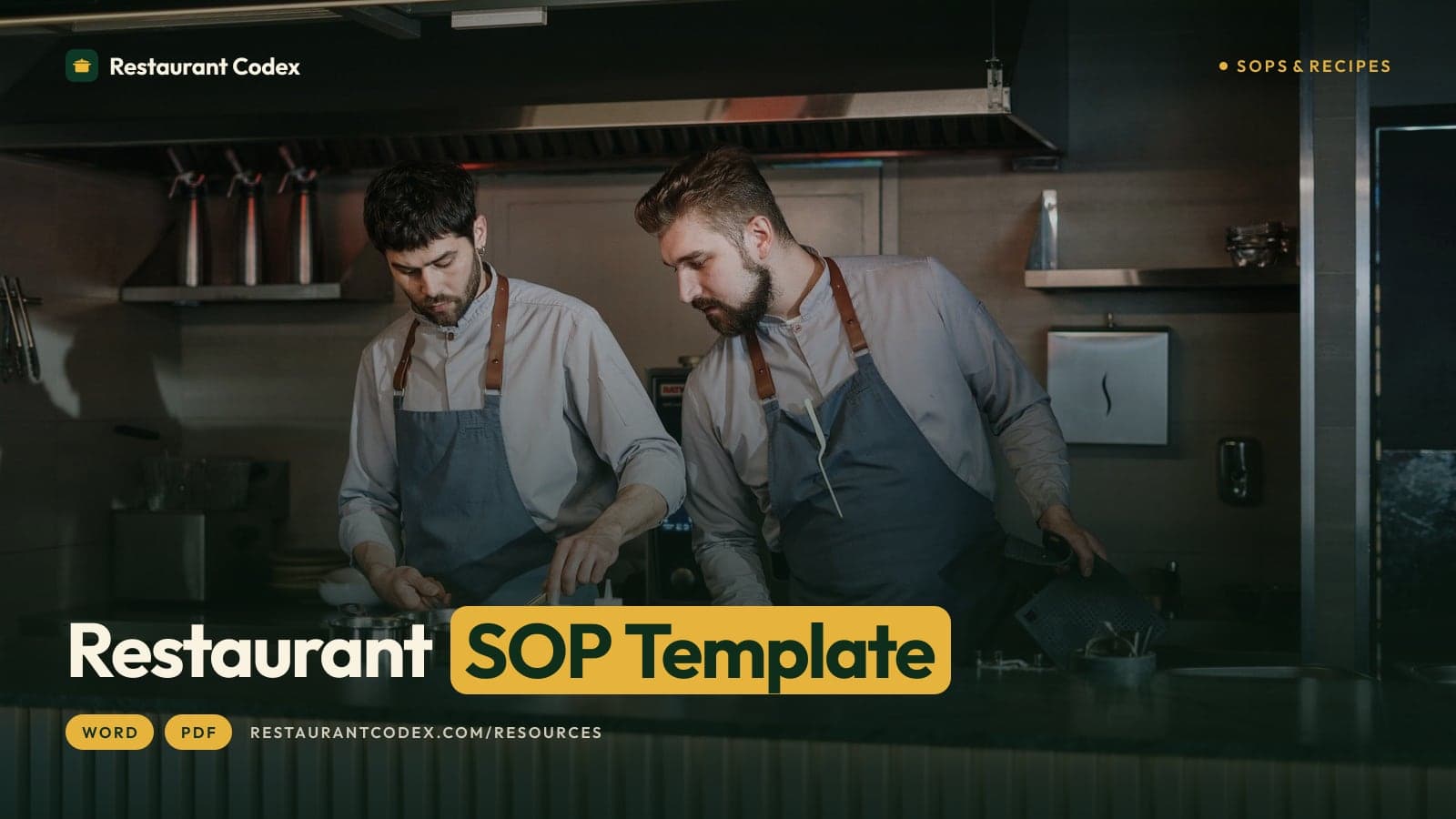
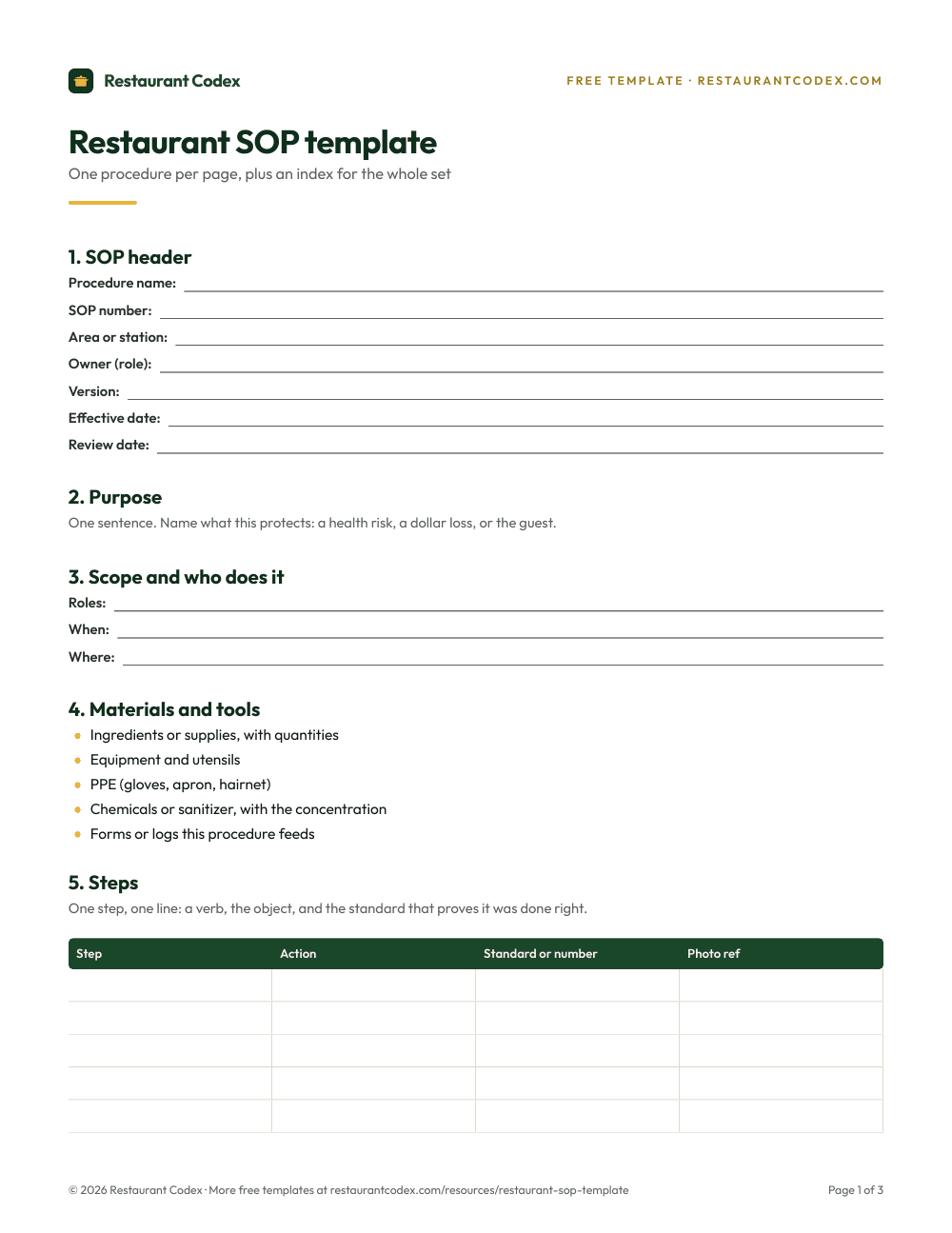
The documentation doesn't need to be exhaustive on day one. It needs to cover the twenty or so procedures that actually cause arguments when nobody wrote them down, plate standards, cash counts, the opening and closing checklist, and live somewhere searchable, a knowledge base instead of a folder named "recipes final v3." Everything else can get written as it comes up, as long as the twenty that matter most are already done.
Who Should Run the Second Location?
The second location should be run by whoever can make the twenty or so documented decisions on their own and log them, not by whoever's most available or most loyal, qualities that sometimes point at the same person and sometimes don't. The job isn't a reward for tenure. It's a test of whether someone can run a shift without calling you, the same test a GM has to pass at location one before you ever consider a second site.
Two options actually work. Promote from inside the first location, someone who already knows your standards and just needs the decision boundary written down for them explicitly, or hire someone with the experience to run a kitchen or a floor who then learns your specific standards from the written file, not from you personally repeating yourself at a second address. What doesn't work as well as it looks like it should: moving yourself into the new location full time and assuming the first one will be fine because it's been fine so far. It was fine because you were catching things. Move that catching to a second building and the first one starts drifting the same week, just quietly enough that nobody flags it for a month.
Whoever you pick, give each concept one named owner of its standard instead of splitting that job informally between whoever's around. It matters more once the second location isn't a copy of the first. Groups that run more than one concept on Restaurant Codex include Mercado 24 and Dora la Tostadora in Guatemala City, both chef Pablo Díaz's, and Molino Project in Seoul.
This is also where the ownership question splits in two, worth naming even briefly: a second location you own and run yourself is a different animal from a franchise, where someone else owns the operation and licenses your brand and your systems. Most of this guide, the readiness test, the documentation, the GM authority, assumes you're opening your own second site. A franchise shifts a lot of that operating burden to the franchisee, a different decision with its own tradeoffs, not a shortcut through this one.
How Do You Keep the First Location From Slipping?
You keep the first location from slipping by putting both locations on the same weekly review, with the same numbers, on the same screen, instead of trusting that a store that's been fine for years will stay fine while your attention is somewhere new. That review is the whole mechanism; everything else, written standards, a documented GM, a daily proof loop, is what makes the numbers in that review mean something instead of being reported from memory the night before.
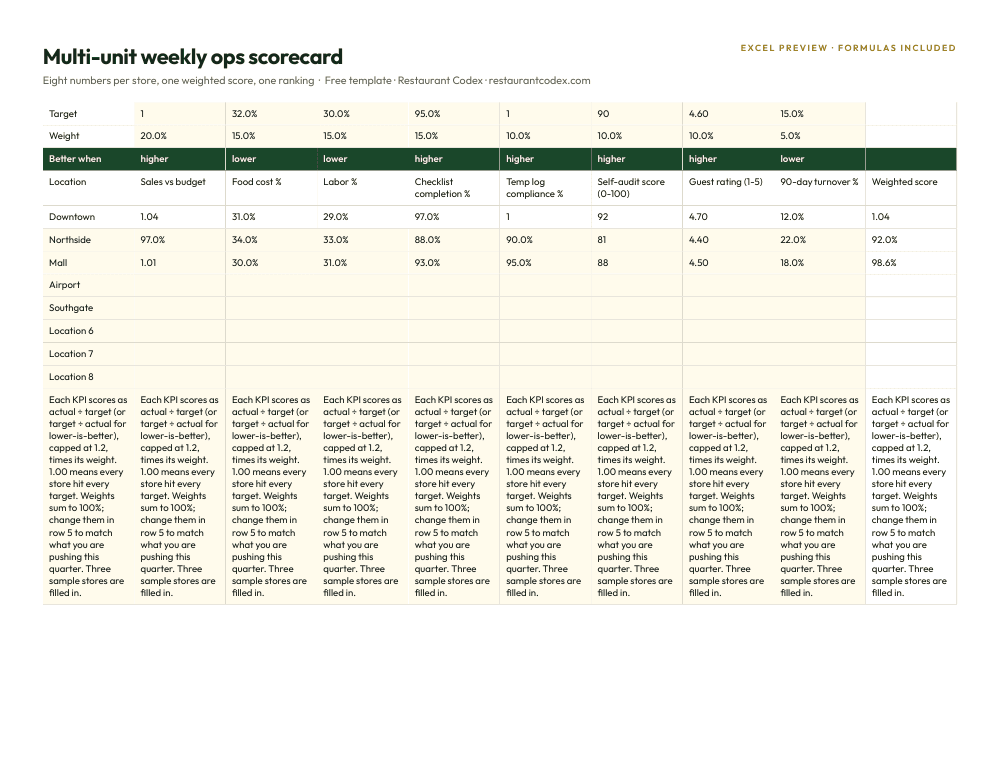
Avenida Café Bistro in El Salvador saved two hours a day once opening and closing got easier to run with real visibility and less direct supervision, exactly the capability a two-location owner needs most: a way to see what's happening at the location you're not standing in, without standing in it. Restaurant consistency across locations covers the specific mechanics, spec sheets, spot checks, a shared recipe file, that keep two sites measured against the same standard instead of two slightly different ones.
The mistake that shows up most is spending a full month camped out at the new location and treating the first one as handled. A month of full attention on the new site is a month the first one didn't get any, and five good years don't buy immunity from one quiet one.
A Worked Example: What a Ramp-Up Actually Costs in Cash
Say a hypothetical second location, full-service, has fixed monthly costs of $52,500, rent, insurance, salaried management, a loan payment, and a contribution margin of 35%, what's left of each sales dollar after food and the hourly labor that scales with volume. Fixed costs divided by contribution margin gives a break-even sales target of $150,000 a month.
New locations don't open at that number. They climb to it. A reasonable climb looks like this:
| Month | Sales (% of break-even) | Sales | Contribution margin dollars | Fixed costs | Cash shortfall |
|---|---|---|---|---|---|
| 1 | 50% | $75,000 | $26,250 | $52,500 | $26,250 |
| 2 | 70% | $105,000 | $36,750 | $52,500 | $15,750 |
| 3 | 90% | $135,000 | $47,250 | $52,500 | $5,250 |
| 4 | 105% | $157,500 | $55,125 | $52,500 | none, $2,625 surplus |
Add up the shortfall across the first three months and the ramp alone needs $47,250 in cash, on top of the build-out budget and the opening inventory, before the location turns a profit. Skip that number and the math still happens, just as a cash crunch in month two instead of a line item in a spreadsheet in month zero. It's also part of why 42% of U.S. restaurant operators said their restaurant wasn't profitable in 2025, per the National Restaurant Association's 2026 State of the Restaurant Industry report: most of the ones that aren't profitable yet aren't necessarily failing, they're climbing, and plenty of owners run out of runway on the way up.
Where Restaurant Codex Fits
Restaurant Codex doesn't make the lease cheaper or shorten the ramp. What it does is give the second location the same written standards, the same decision boundary, and the same weekly numbers as the first one from its opening day, instead of asking a new GM to rebuild all of it from memory at a new address. A recipe published once in the knowledge base reaches both locations the same day; a weekly scorecard puts both stores on one screen instead of two separate habits of checking in.
If you're already past two locations, our guide to running a multi-location group covers the operating habits that come next. This guide comes out of a team led by a chef who has opened eight restaurants in five countries, part of why it treats the slow ramp as the normal case and not a sign something went wrong. What it doesn't do is replace the cash reserve, the GM you still have to find and trust, or the small decisions that only get made correctly once someone's actually run a floor. Operations can carry the checklists and the proof. It can't carry the judgment.
Restaurant Codex
The same checklist, on every phone, with photo proof
Restaurant Codex runs this template as a live task with timestamps, photos and one view across every location. Bring it to a 30-minute working session and we'll show you how it would run across your locations.
By the Restaurant Codex team
Written with operators who run multi-location restaurant groups. Reviewed against the FDA Food Code and the sources listed below.
Sources
- National Restaurant Association, State of the Restaurant Industry 2026 press release: 42% of operators were not profitable last year
- Square, "How Much Does It Cost to Open a Restaurant?" (March 2026)
- National Restaurant Association 2026 data via WhippleWood, Financial Benchmarks for Restaurants
- Restaurant365, How to Calculate Prime Cost in a Restaurant
- BLS, Job Openings and Labor Turnover Survey, Table 4, quits and separations by industry
- FRED (Federal Reserve Bank of St. Louis), Total Separations: Accommodation and Food Services (JTS7200TSR)