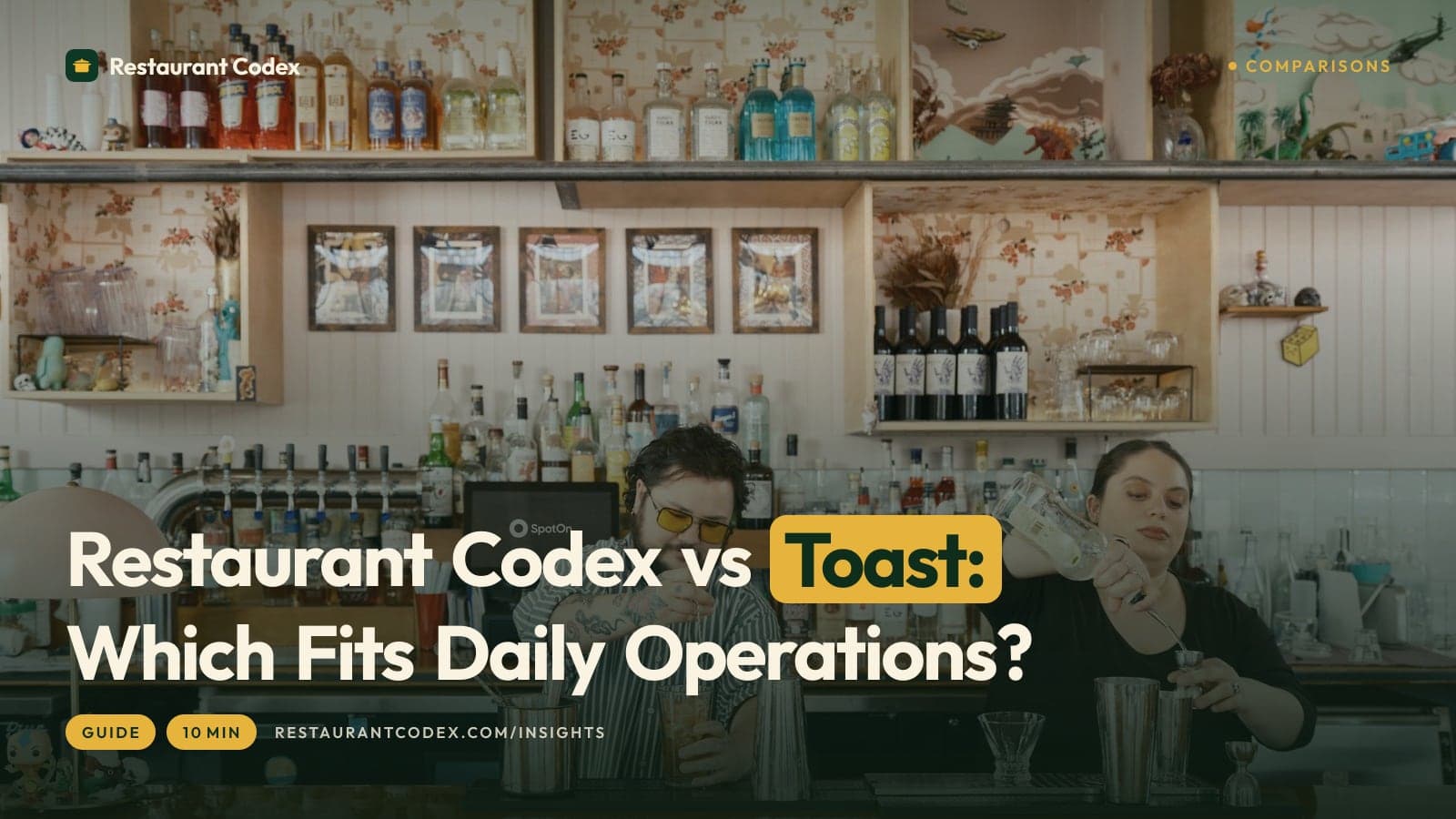
How does Restaurant Codex compare to Toast for operations and training?
Toast runs the register. Restaurant Codex runs the shift. Toast's own investor site describes the company as helping owners and operators "manage their businesses more efficiently, drive guest demand, and build lasting success" through point of sale, payments, and the hardware that sits on the line, Flex terminals, Tap devices, kitchen displays. Restaurant Codex sits next to that POS and covers the parts Toast doesn't: checklists with photo proof, an SOP and recipe knowledge base, training paths with quizzes, and food cost tracking, in one view across every location. A fair number of operators run both, because the two solve different problems.
That split shows up in Toast's own training product. "Toast Classroom" teaches an owner or manager how to operate the Toast system, the POS, the reporting, the back office, not how to run a pre-shift briefing or log a walk-in cooler's temperature. Nothing on Toast's accessible product pages describes a checklist tool, a temperature log, or an SOP knowledge base for the floor and the kitchen. That's not a knock on Toast. It's a scope decision, and it's the reason a lot of Toast restaurants still keep temp logs on a clipboard and SOPs in a shared folder well after the POS rollout is finished.
Who each one is built for
Toast is built around the moment of the transaction: an order gets placed, a payment gets taken, a ticket fires to the kitchen. Its own marketing spans "the busiest local restaurants and shops" to "large hospitality brands," with no stated unit-count floor, and it's a POS company first, with scheduling, payroll, and inventory sold as add-ons around that core.
Restaurant Codex is built around the moment before and after that transaction: the prep that has to happen before service starts, the standard a recipe or a cleaning task has to hit, and the training that gets a new hire to the point of running a station alone. It's built specifically for groups running 2 to 50 locations who need one place to see whether every store actually did the work, not just whether every store rang sales that day.
A six-location group is a fair stand-in for who ends up needing both. Every store runs Toast at the register, so orders and payments already work the same way everywhere. What doesn't automatically match is whether the Tuesday prep list got done at store four, whether the walk-in got checked at store two before the delivery arrived, or whether the new hire at store six actually passed a knife-skills check before being put on the line alone. Toast's receipts answer the first question. Nothing on Toast's product pages answers the second or third.
What each platform actually does
Toast covers point of sale, payments, inventory, scheduling and payroll; Restaurant Codex covers checklists, food safety, SOPs and recipes, training, and food cost. Row by row:
| Toast | Restaurant Codex | |
|---|---|---|
| Checklists and tasks | Not found on any accessible Toast page | Digital checklists with photo proof and timestamps |
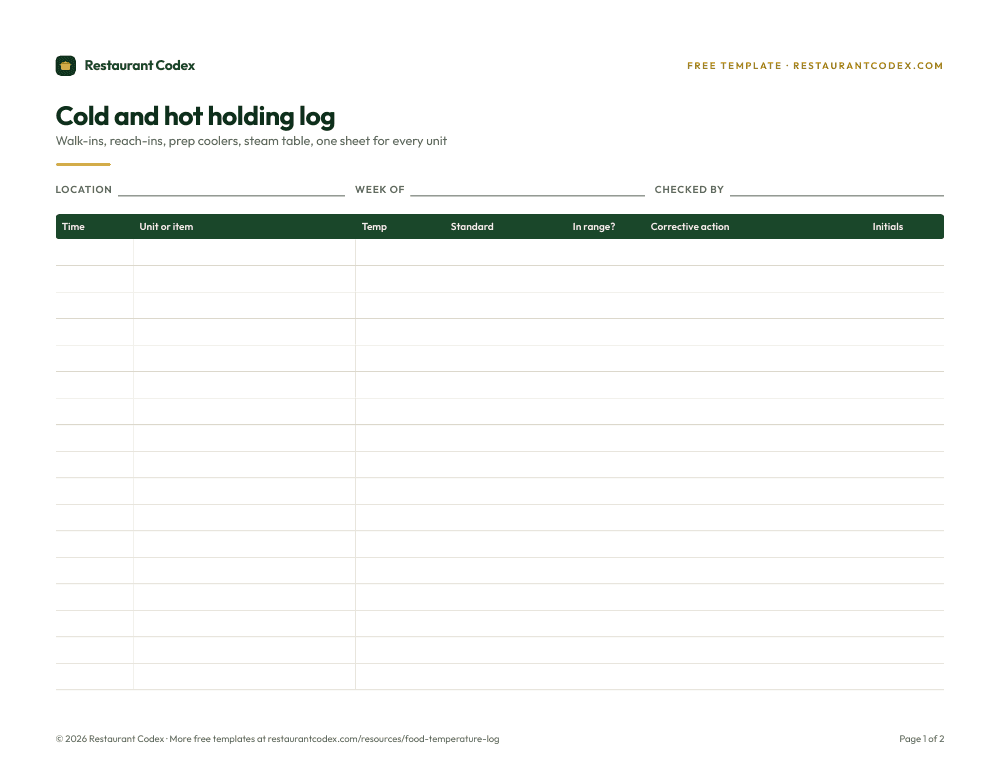
| Food safety and temps | Not found on any accessible Toast page | Logged through the same checklist system, timestamped |
| SOPs and recipes | Not found; Toast Classroom teaches the POS, not kitchen SOPs | Knowledge base with an AI assistant that answers from the operator's own SOPs and recipes |
| Training | Toast Classroom trains staff to operate the POS system | Training paths, quizzes, and certifications tied to the same SOP content |
| Inventory and food cost | Inventory management listed as a feature | Inventory and food cost variance tracking |
| Scheduling | Employee scheduling, payroll, and timekeeping listed as features | Not part of Codex |
| POS | Core product: payments, orders, proprietary hardware (Flex, Tap, Toast Hub) | Not part of Codex; built to run alongside an existing POS |
| Multi-location view | Not described on any accessible page | One live view across every location |
| Languages | No Spanish or multi-language mention found on any page checked | English and Spanish |
| How staff log in | Proprietary hardware terminals; not app-based | QR code or phone number, no app store |
| Pricing model | Tiered software plans plus separate, unpublished hardware pricing | Per-location subscription, quoted on a 30-minute call |
Where Toast is the better choice
Toast is the better choice when the register itself is the thing being solved and one vendor for it is worth more than a second system alongside. Three real reasons.
One bill, one vendor. If the plan is POS, payments, scheduling, payroll, and inventory all from the same company, Toast bundles that instead of asking a restaurant to reconcile a POS vendor against a second, unrelated ops platform. For a single location just trying to open, that simplicity is worth something on its own.
Scale and a support network that's been tested. Toast says it's used in roughly 120,000 US restaurants as of June 2024, and lists $6.15 billion in 2025 revenue. That kind of install base means more staff who've already worked a Toast terminal somewhere else, fewer surprises during a manager's first week on the system, more third-party integrations built against it, and a hardware supply chain that's been through a lot of Friday nights.
Hardware built for the line. A Flex terminal or a kitchen display screen is purpose-built for a pass window in a way a personal phone isn't. Guest-facing screens and handheld payment devices solve a real problem at the table that a checklist app was never meant to solve.
Where Restaurant Codex is the better choice
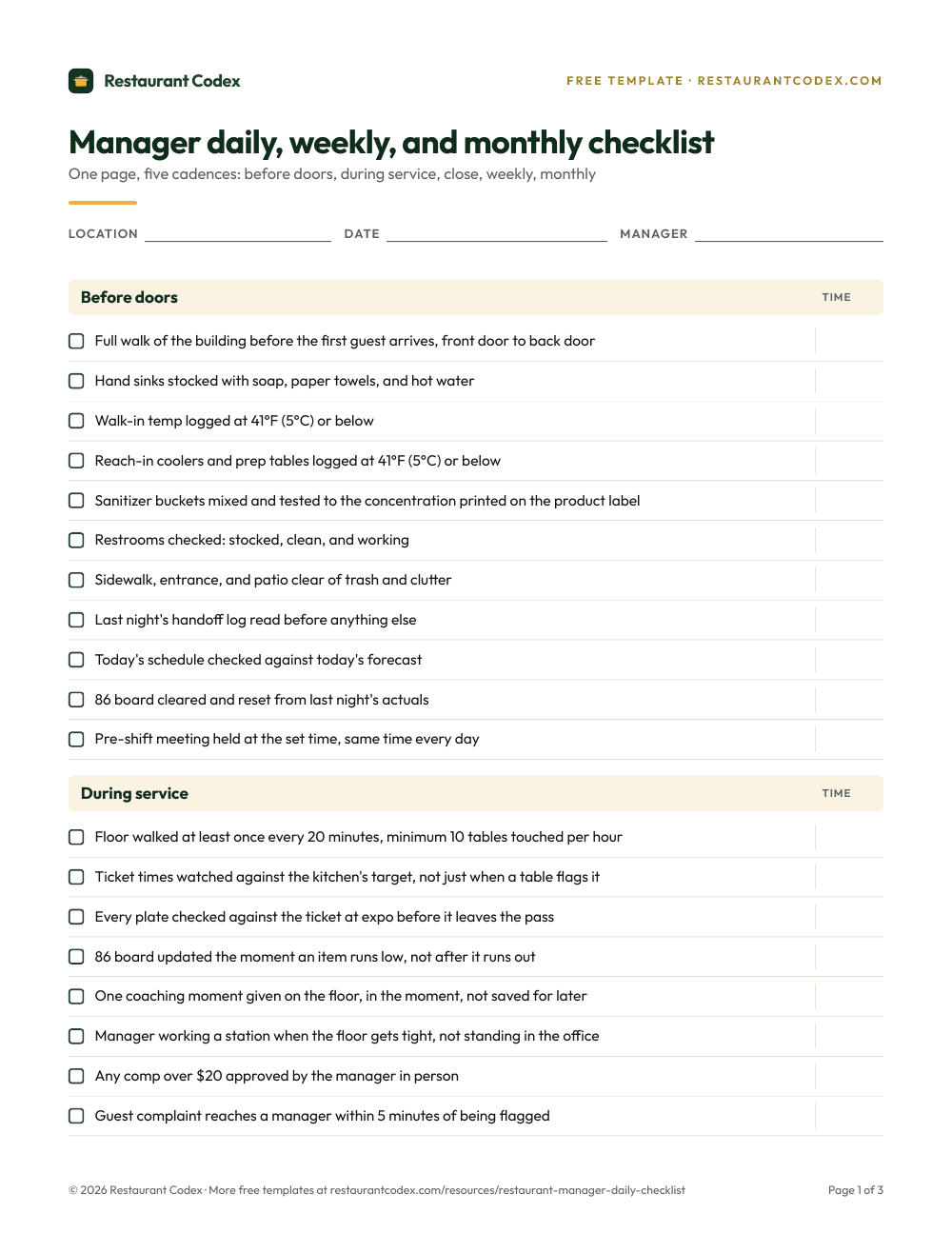
Restaurant Codex is the better choice for the work that happens off the register, which is exactly where Toast's own product pages go quiet. No checklist tool, no temperature log, no SOP or recipe knowledge base turned up on any Toast page checked, and Toast Classroom trains people to run the POS, not the kitchen. Codex's checklists carry photo proof and a timestamp, so a manager doing a line check or logging a walk-in temperature leaves a record that holds up at a health inspection, not a memory of whether it happened.
The knowledge base closes a second gap. A cook or a server can ask a question about an SOP or a recipe and get an answer pulled from the restaurant's own documents, instead of interrupting a manager mid-rush or guessing. Training paths, quizzes, and certifications sit on that same content, so what someone studies and what they're tested on are the same document the kitchen actually runs on.
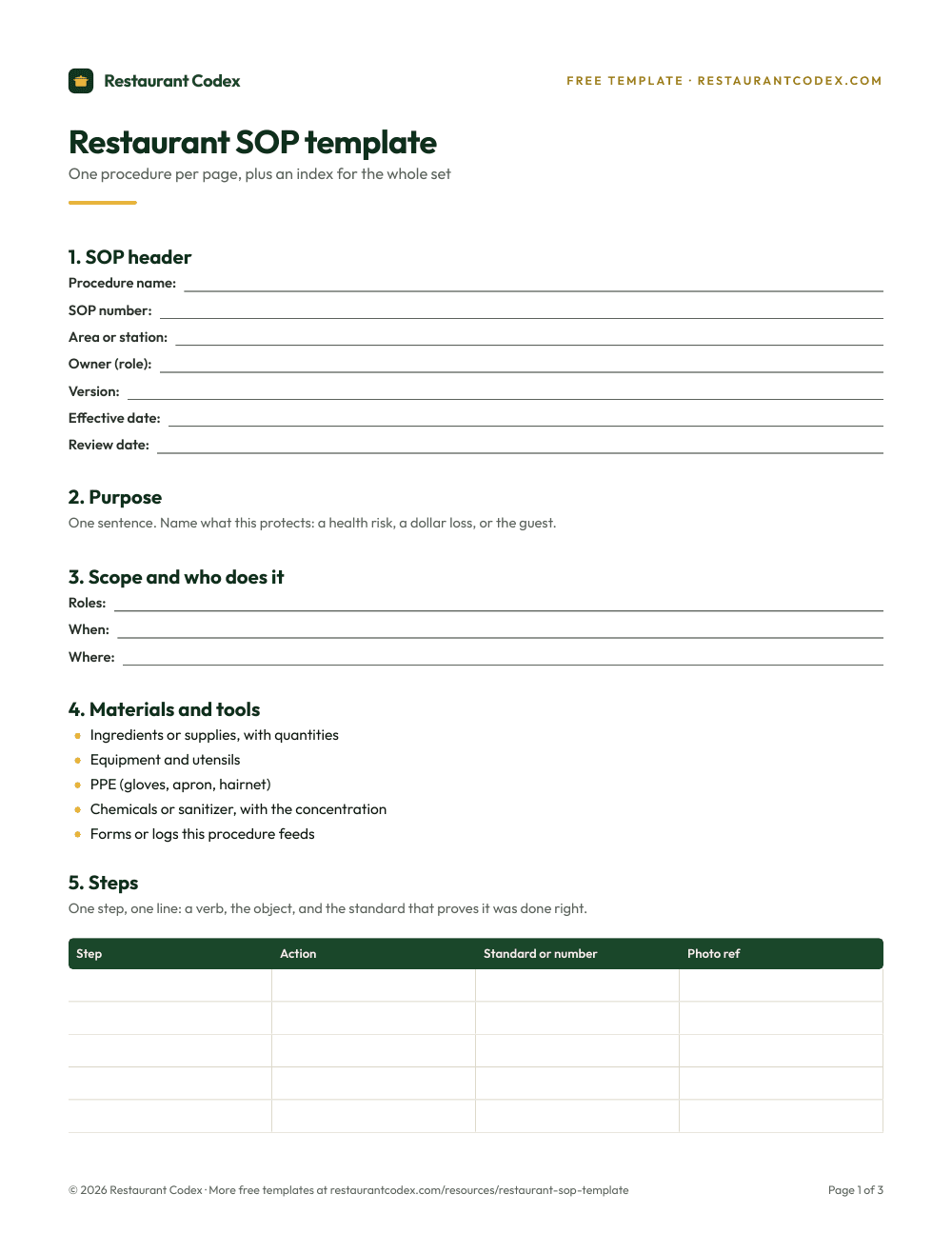
Multi-location visibility is the other piece. Codex gives an owner running several stores one live view of whether every location is actually doing the work, not just processing sales, and it runs in English and Spanish, which matters on a floor where part of the crew works in Spanish day to day. Staff join by scanning a QR code or entering a phone number. No app store, no separate login to manage on top of the POS they're already using for orders. Go back to the six-location group: with Codex, a walk-in temperature logged late at store two shows up on the owner's phone the same morning, not at the end of the week when someone finally pulls the paper logs together for a spot check.
What Toast reviewers say
GetApp scores Toast at 4.1 out of 5 across 554 reviews. That's the source here, a Gartner Digital Markets property related to Capterra, because Toast's own G2 and Capterra listings blocked every direct request during this research. The praise clusters around the hardware and the transaction flow: reviewers single out the retail inventory view for spotting trends, the handheld devices for contactless payment, and the order management tools for keeping tickets organized during a rush. The complaints sit somewhere else entirely: slow support with long hold times, budget surprises tied to integration pricing, and cases where connected systems fall out of sync and a tab gets left unpaid. None of that touches checklists, temp logs, or training, because Toast doesn't compete in that category. The complaints and the praises both sit inside the POS and payments world it was built for.
What each one costs
Toast's published software tiers run from a free "Starter Kit" to a "Point of Sale" plan at $69 a month, with a quote-based "Build Your Own" tier above that. Those figures come from GetApp's mirror of Toast's pricing, because Toast's own pricing page blocked every automated access attempt during this research. Hardware, the terminals, the kitchen displays, the handheld devices, isn't priced on any page found; only the device names are public.
Restaurant Codex doesn't publish a price list either. It runs on a per-location subscription, quoted on a 30-minute call, with onboarding done together with the operator rather than handed off to a self-serve wizard.
What implementation looks like
Toast's setup is hardware-dependent by design: a Flex terminal, a Tap device, a Toast Hub, a receipt printer, whatever combination the store needs, has to arrive, get mounted, and get wired into the kitchen before the POS does anything. Whether that installation is self-serve or sales-assisted isn't confirmed on any page checked, and neither is a minimum contract length, though a quote-only "Build Your Own" tier suggests a sales conversation happens above the entry plan. That's a materially different rollout than a software-only subscription: hardware has to ship, get installed, and get tested on-site before day one.
Restaurant Codex is software-only, so there's no hardware to receive or mount. Onboarding is done with the operator directly, not a self-serve signup form: someone helps load the SOPs, recipes, and checklists that already exist rather than asking a busy GM to build a knowledge base from a blank page during a launch week.
How to decide in one afternoon
Start with a list, not a demo. Write down what's currently running on paper, in a group chat, or in a shared folder: opening and closing checklists, temperature logs, the SOP binder nobody's opened since orientation, the training plan for a new hire. That list is the actual gap, whatever it turns out to be.
Check it against what Toast actually ships. If everything on the list is POS, payments, scheduling, payroll, or inventory, a Toast quote answers the question directly. If the list is checklists, temp logs, SOPs, or training, that's outside anything found on Toast's accessible product pages, and it's worth a look at what an operations and knowledge base system covers instead.
Ask who already has Toast. If every store already runs Toast for orders and payments, the afternoon's real question isn't POS versus Codex, it's whether to add an ops layer on top of a system that's already working fine for the register. That's a much smaller decision than a full platform switch, and it's the one most groups running Toast actually face.
Run the money both ways. Toast's published software tiers start free and step to $69 a month before hardware; get an actual hardware number before comparing anything. Book Codex's 30-minute call for a per-location figure instead of guessing. A food cost and prime cost calculator makes it easier to weigh either cost against what a missed temp log or an undertrained new hire actually costs a store.
Most groups don't end up choosing one over the other. Toast keeps running the register; Codex runs the shift around it, checklists, SOPs, training, one view across locations, covering the work that Toast's own product pages don't.
Restaurant Codex isn't trying to replace a POS system and isn't competing for the register. It handles checklists with photo proof and timestamps, an SOP and recipe knowledge base with an AI assistant that answers from the operator's own content, training paths with quizzes and certifications, and inventory and food cost tracking, in one live view across every location, in English and Spanish. Staff join with a QR code or a phone number, nothing to download. It's built for groups running 2 to 50 locations, priced per location on a 30-minute call, with onboarding done together with the operator.
Restaurant Codex
The same checklist, on every phone, with photo proof
Restaurant Codex runs this template as a live task with timestamps, photos and one view across every location. Bring it to a 30-minute working session and we'll set it up on your real operation.
By the Restaurant Codex team
Written with operators who run multi-location restaurant groups. Reviewed against the FDA Food Code and the sources listed below.