Who is MeazureUp built for?
MeazureUp is built for multi-unit brands that want to audit their stores against a standard and track the fixes. Ladle's own words for it are "field audits and daily checklists for foodservice operators", with digital audits replacing paper, scoring built in and corrective actions tracked to the end. The AuditApp page markets to "10-200+ units" and "30-200 QSR locations or growing RMGs", and names Golden Corral, Bahama Bucks, Basil Box, Krystal, Nathan's Famous and Pizza Ranch as brands that use it. That is the profile: a chain with above-store leaders who visit locations and need a consistent form and a record.
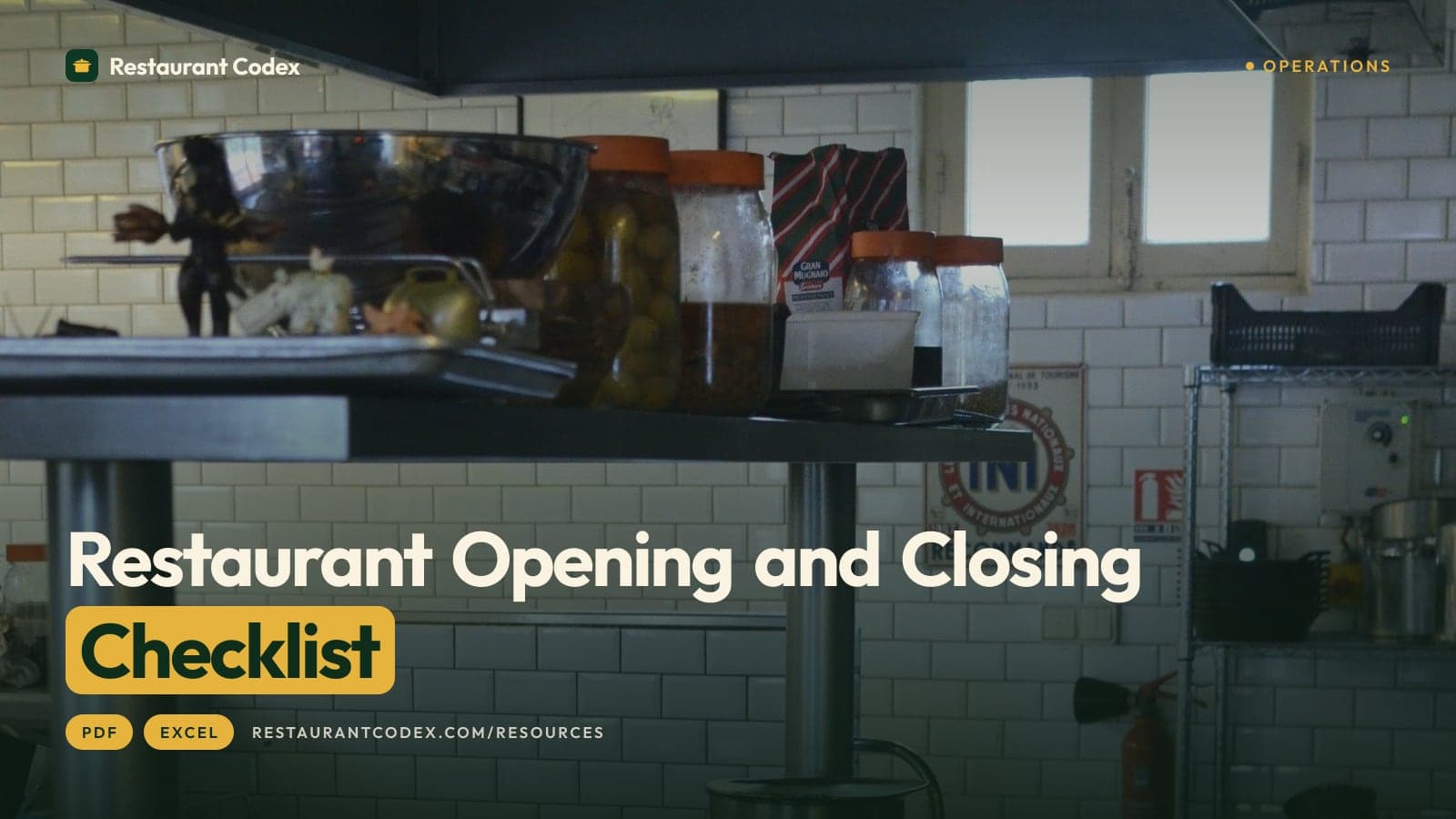
Restaurant Codex is built for the work the audit is looking at. It runs opening and closing lists, line checks and temperature logs with photo proof, the SOPs and recipes the team works from, training paths and inventory with food cost, and it prices per location. It suits one restaurant or twenty, and it doesn't assume a field-audit team. It also has no weighted audit scoring, so it doesn't replace a scored visit.
Restaurant groups that run on Restaurant Codex include Mercado 24 in Guatemala City, where chef Pablo Díaz's kitchen is No. 42 on Latin America's 50 Best Restaurants 2025, Koli Cocina de Origen in Monterrey, which has held one MICHELIN Star since 2024, and Tapiz Bistro & Bakery in Mexico City. The awards belong to those restaurants, not to the software. See the customers page.
What does each platform actually do?
MeazureUp covers audits, checklists and the follow-up on what they find. Restaurant Codex covers the checklists plus the standards, training and inventory behind them. Row by row, with MeazureUp's side taken from Ladle's pages in October 2026:
| MeazureUp (Ladle) | Restaurant Codex | |
|---|---|---|
| Field audits and site visits | Core product: digital audits and site assessments on mobile or tablet, built-in and custom scoring, low scores and repeat issues flagged | No weighted audit scoring; managers get a morning plan and an end-of-day scoreboard, and owners compare locations side by side |
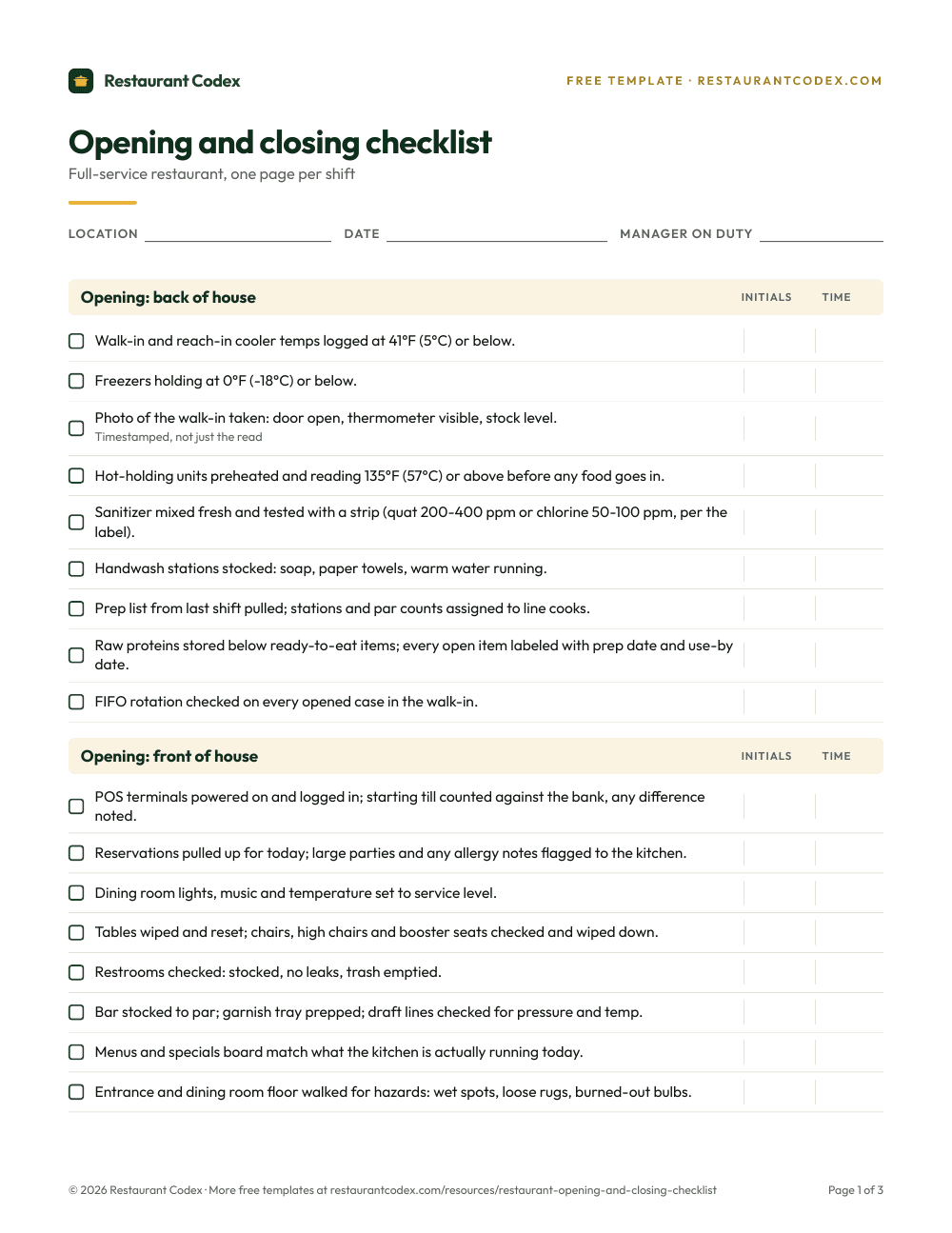
| Daily checklists | Daily checklists with real-time scoring and photo proof | Opening and closing lists, line checks, temperature logs, deep cleans and side work run on schedule in each location's own time zone; tasks can require photo proof |
| Follow-up on issues | Auto-assigned actions, corrective action tracking and automated action plans, checked for completion | "Due soon" and "overdue" pushes to the assignee, and a "still not done" alert to the location's managers about an hour late |
| Records | Time-stamped, geolocated entries; searchable records for health inspectors | A live activity feed across locations; every Copilot change is logged with before and after values and can be undone |
| SOPs and recipes | Not described on the pages we read | Knowledge Base: SOPs, policies, the house manual and recipes with allergens, photos, yield and shelf life; Codex Bot answers staff from the group's own manual |
| Training | "Mobile-friendly assessments" and scoring used to train and assess employees; no learning paths described | A learning path per job role on day one, tests graded on the server, a manager's practical sign-off, certificates, readiness by location, role and path |
| Inventory and food cost | Not described on the pages we read | Invoices photographed and read line by line, blind counts, waste logged with a reason, a buying list by supplier, food cost per location |
| Temperature monitoring | Sensor-based, through Ladle's separate ComplianceMate brand | Temperature logs filled in the app with photo proof; no sensors |
| AI | Not described on the pages we read | Codex Copilot answers questions and acts across modules and locations, with approvals for risky changes |
| Languages | Site in English (en-US) only | App in English, Spanish (Latin America) and Portuguese (Latin America), chosen per person |
| Pricing model | No public price; demo request, with a 14-day AuditApp trial | Per location, quoted on a 30-minute call, no free tier |
Read it by what's missing. MeazureUp is deep on one job, auditing and correcting, and the pages we read are quiet on recipes, SOPs, learning paths and inventory. Restaurant Codex covers more ground, but it doesn't score a visit the way a purpose-built audit tool does. Which gap you can live with is the whole decision.
Where MeazureUp is the better choice
MeazureUp is the better choice when the scored audit is the job. If an area manager walks a store with a form, gives it a number and needs that number to trigger a follow-up that someone verifies, MeazureUp's scoring, auto-assigned actions and action plans are exactly that. Restaurant Codex has nothing that scores a visit, and we'd rather say so than pretend.
It's the better choice for brands that audit against a franchise or brand standard at scale. Ladle's pages talk about comparing performance "across stores, markets, or brands" with role-specific dashboards and about trend analysis over time, and Ladle's own About page says its strategic accounts team works with global contract food-service providers and internationally recognized franchise brands. If your group is thirty locations or more and an above-store team does most of the checking, that is the buyer Ladle is describing.
It's also the better choice if you want sensor-based temperature monitoring, because ComplianceMate sits in the same company. Ladle says ComplianceMate pioneered real-time, sensor-based monitoring that provides digital proof across every location. Restaurant Codex has no sensors; temperature logs are filled in on a phone.
And it's the easier one to try. AuditApp has a free 14-day trial with full access and no credit card, according to Ladle's trial page. Restaurant Codex has no free tier; you book a 30-minute call.
Where Restaurant Codex is the better choice
Restaurant Codex is the better choice when audits keep finding the same thing: the standard is unclear, or nobody was taught it. A low score on "plating matches spec" doesn't help if the spec lives in a binder and a chef's memory. Restaurant Codex keeps the recipe, the plating, the allergens and the SOP in the Knowledge Base, shares them with the roles that need them, and lets Codex Bot answer a cook's question from the group's own manual. The MeazureUp pages we read describe none of that.
It's the better choice if you need to prove a person is trained, and a store passing doesn't show that. Each job role gets a learning path in the staff app on day one, tests are graded on the server, a manager signs off on the practical skill at the station, and readiness shows by location, role and path. See Training and LMS.
It's the better choice for food cost. Supplier invoices are photographed and read line by line, price increases flagged and duplicates stopped, counts are blind, and waste is logged with a reason, rolling up to food cost per location. An audit can tell you a walk-in was messy. It can't tell you a supplier raised the price of chicken last month. See Inventory.
It's the better choice for a team that works in Spanish or Portuguese. The Restaurant Codex app runs in English, Spanish (Latin America) and Portuguese (Latin America), chosen per person. Ladle's site is in English only.
Say a six-location group has a district manager who visits each site once a month with a clipboard. Scoring those visits is worth doing, and a scored audit tool does it well. But the visit finds out on day thirty what a daily list, a recipe card and a new-hire path would have caught on day one. If that is the group's real problem, spend on the daily system first and keep the monthly walk on paper or a spreadsheet.
What does each platform cost?
Neither publishes a price. Ladle's MeazureUp and AuditApp pages send you to "See a Demo" or "Request a Demo", ladle.com/pricing redirects to the home page, and the only figures on the site are the 14-day trial and its "no credit card" line. Restaurant Codex is paid, priced per location and quoted on a 30-minute call, with no free tier. Each Codex location includes Operations, Knowledge Base, Training and LMS, Inventory, Codex Copilot, 5 manager and admin seats and 50 staff app seats.
So the comparison is the questions you ask on each call, not a table of numbers. Ask Ladle whether audits and daily checklists are priced together or apart, whether ComplianceMate sensors are a separate quote, what the contract length is, and what the per-location price is at your size. Ask Restaurant Codex what is in the per-location price, how many locations you need before a rollout makes sense, and what the 8-Week Implementation Program includes, which is weekly one-on-one meetings, hands-on support and ongoing guidance. Put both quotes against what you spend now on audits, paper, training and inventory.
What changes across several locations
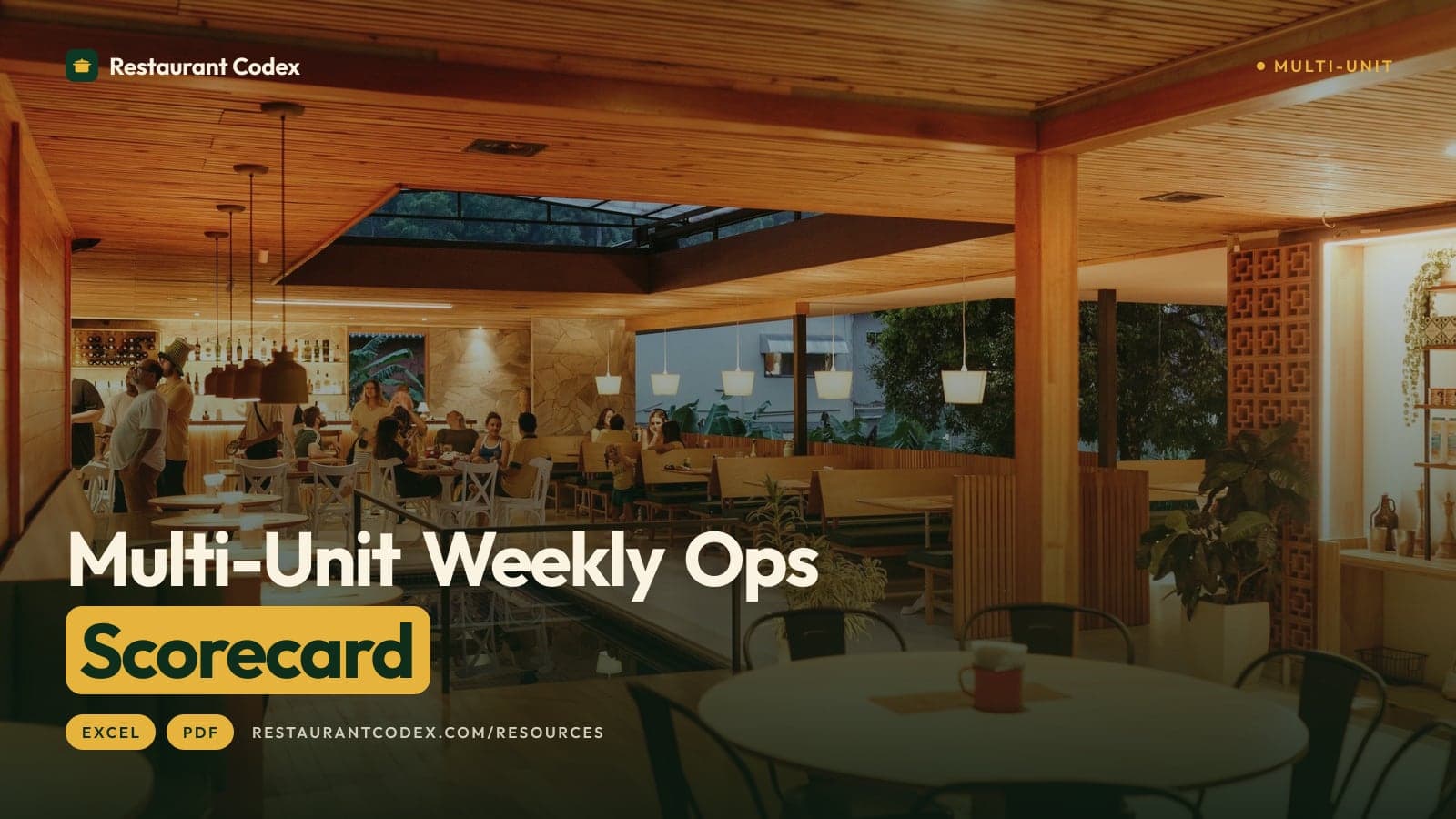
MeazureUp was designed for the multi-unit case, and it shows. Audits are standardized so every location is judged on the same form, results are stored for trends by location, region or brand, and dashboards are role-specific so a regional manager sees different numbers than a store manager. The weakness at scale is not the audit tool, it's that the audit is the only layer. A group with fifty stores still needs the recipes, the training and the purchasing somewhere else.
Restaurant Codex puts every location in one dashboard. Every location starts on the same plan, owners compare locations side by side with a live activity feed, managers get a morning plan and an end-of-day scoreboard, and a GM at location twelve reads the same Knowledge Base as location one. What it doesn't give a regional director is a scored, weighted visit report. For that, either keep the audit you have or ask the Codex team how your visit form could run as a scheduled list. See multi-location restaurant software and the guide to running an operations audit across locations.
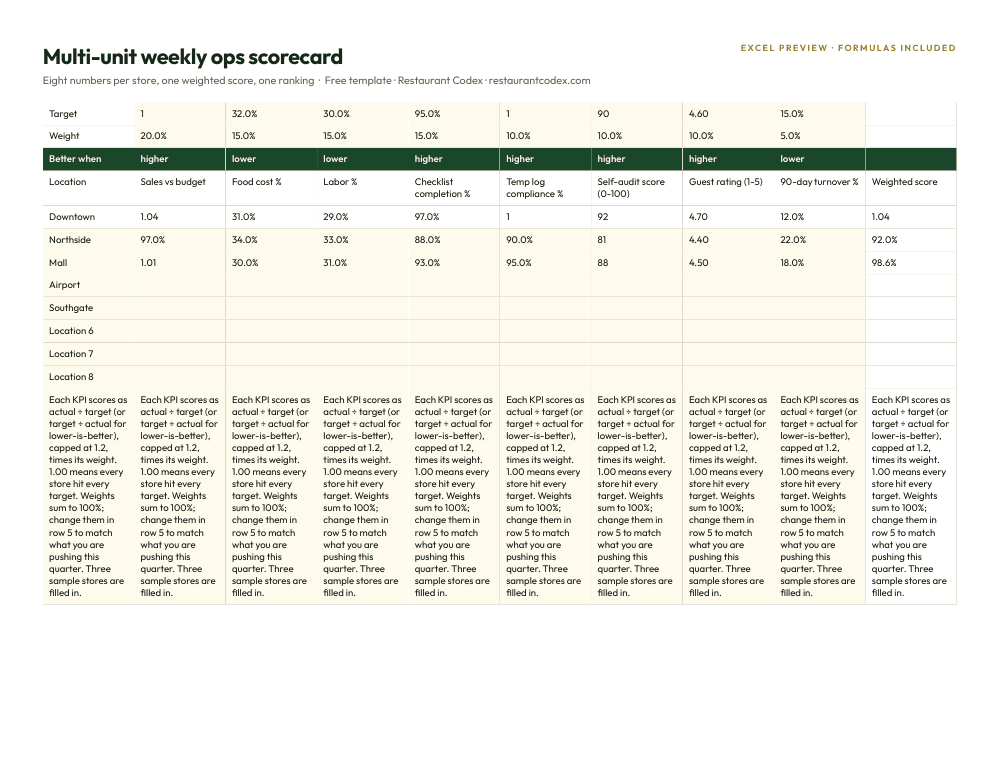
How to decide
Start with what your last three audits found. If the findings were mostly "the form wasn't done the way the brand requires," a scored audit tool fits and MeazureUp is a serious option. If they were "the cook didn't know the spec" or "this location's food cost is off," the gap is upstream of the audit, and a system that teaches and tracks the work will move the score more than a better form.
Then check who does the checking. An above-store team of several people with a travel schedule is MeazureUp's buyer. A group where the GM and owner run the checks themselves from the floor is not paying for field-audit software it won't use.
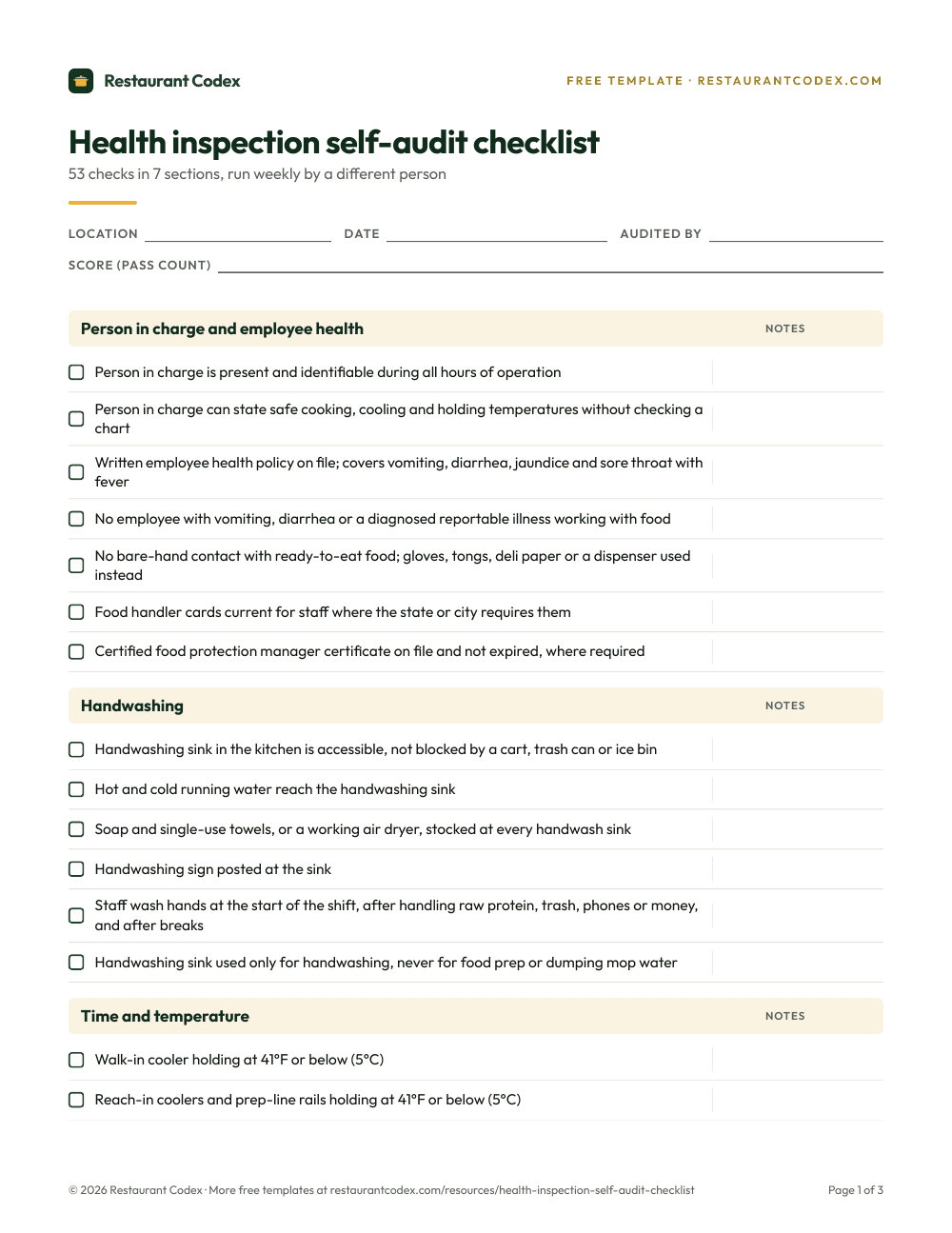
Last, ask both vendors for the same demo: take a failed item and show where it goes, who is told, how the fix is verified and where the record lives a year later. For Restaurant Codex, ask to see a recipe change reach a line cook's phone and the sign-off that follows. The free self-audit checklist below is a quick way to see what you would audit before you buy anything.
Restaurant Codex
The same checklist, on every phone, with photo proof
Restaurant Codex runs this template as a live task with timestamps, photos and one view across every location. Bring it to a 30-minute working session and we'll show you how it would run across your locations.
By the Restaurant Codex team
Written with operators who run multi-location restaurant groups. Reviewed against the FDA Food Code and the sources listed below.