What does NOM-251 regulate in restaurants?
NOM-251-SSA1-2009 regulates hygiene practices across the entire process of handling food, beverages and food supplements in Mexico, from raw material to the plate that reaches the table. Point 1.2 makes it mandatory for any individual or company that processes food for consumers in national territory, regardless of the size of the business or whether you run one location or twenty.
The standard is organized into chapters, and they don't all apply the same way to a restaurant. Chapter 5, General Provisions, covers facilities, equipment, water, storage, raw material control, packaging, maintenance and cleaning, pest control, waste handling, personnel health and hygiene, transport and training, and it applies to any establishment that processes food. Chapter 6, for factories, carries its own documentation rules that don't apply if you only run a restaurant. The one that applies in full, alongside Chapter 5, is Chapter 7, Food and Beverage Service Establishments: bar equipment, service facilities, temperature control, handling control, cleaning, and personnel hygiene, with its own numbers for the kitchen and the dining room. Chapter 8, Expendio, covers points of sale like butcher counters or markets, not a restaurant with table service.
In practice, this means a restaurant in Mexico answers to two blocks of rules at once: the general ones in Chapter 5 and the service-specific ones in Chapter 7. If you also operate under US rules, the food safety compliance guide built on the FDA Food Code covers those numbers separately; this guide is the Mexican version, with its own standard and its own numbered points.
What temperatures and records does NOM-251 require?
NOM-251 sets an exact number for each stage of the process, from receiving raw material to washing dishes, and each one lives at its own numbered point in the standard.
| Control | NOM-251 standard | Point |
|---|---|---|
| Refrigeration (equipment) | 7°C (45°F) or below | 5.5.2 |
| Receiving refrigerated raw material | 4°C (39°F) or below (live fishery products: up to 7°C / 45°F) | 5.6.7, Table 1 |
| Freezing (equipment) | A temperature that allows the product to freeze, no fixed number | 5.5.3 |
| Receiving fishery products | 4°C (39°F) fresh, -9°C (16°F) frozen (live: up to 7°C / 45°F) | 7.4.2 |
| Minimum cooking temperature | 63°C (145°F) fish and whole cuts of beef; 68°C (154°F) pork and ground meat; 74°C (165°F) sausages, stuffed items and poultry | 7.3.1 |
| Reheating | 74°C (165°F) or above | 7.3.2 |
| Hot holding | Above 60°C (140°F) | 7.3.3 a) |
| Cold holding, ready to serve | 7°C (45°F) or below | 7.3.3 b) |
| Dishware disinfection by immersion | 75°C to 82°C (167°F to 180°F), at least 30 seconds | 7.5.6 d) |
Two things are worth understanding about this table. First, the 7°C equipment refrigeration number (5.5.2) isn't the same 7°C that covers cold holding of a plated, ready-to-serve item (7.3.3 b); they're two different points that happen to share a number because the standard is strict about cold across the board. Second, freezing doesn't carry a fixed number. Point 5.5.3 only requires equipment to hold "a temperature that allows the product's freezing", so if someone tells you NOM-251 requires -18°C in the freezer, they're quoting a rule that isn't in the text.
In writing, the standard requires only two records from a restaurant. Point 5.8.1 requires a daily log of the free residual chlorine content in any water that directly touches food, contact surfaces or ice. Point 5.10.11 requires a certificate from a contracted pest control provider, or a record if you apply the control yourself, and in both cases the sanitary license number has to appear. Outside those two, the standard doesn't require a written temperature log for a restaurant, only that the number be right and that equipment carry a working, accessible thermometer (5.2.5). That's different from a factory, where point 6.6.1 does require a written refrigeration and freezing temperature log.
For an operator who also knows the US FDA Food Code, it's worth seeing where the two systems match and where they don't.
| Control | NOM-251 (Mexico) | FDA Food Code 2026 (US) |
|---|---|---|
| Refrigeration / cold holding | 7°C (45°F) | 5°C (41°F) |
| Hot holding | Above 60°C (140°F) | 57°C (135°F) or above |
| Cooking poultry | 74°C (165°F) | 74°C (165°F) |
| Reheating | 74°C (165°F) or above | 74°C (165°F) or above |
| Two-stage cooling | Not set as a separate rule | 57°C to 21°C in 2 hours, then to 5°C or below in 4 more hours |
The number that surprises an operator who already knows the Food Code is the last row. NOM-251 doesn't carry a two-stage cooling rule like the FDA Food Code's (§ 3-501.14); it only requires that food be cold by the time an inspector checks it. That doesn't mean cooling fast matters less in Mexico, the bacterial risk is the same, it means that if your group also operates in the US, the shallow-pan or ice-bath discipline you already run there isn't something NOM-251 puts in writing, even though it's still the right practice.
Who inspects restaurants in Mexico?
Oversight of NOM-251 compliance falls to the Secretaría de Salud and to the governments of the states, each within its own jurisdiction, per point 11 of the standard, Observancia de la Norma. In practice, that plays out on two levels. COFEPRIS, the Comisión Federal para la Protección contra Riesgos Sanitarios, is the agency within the Secretaría de Salud that issued the standard and signed its publication in the Diario Oficial de la Federación. The states, for their part, verify within their own territory through their own sanitary authority, under whatever coordination arrangement each one has with the federal government.
Which authority actually shows up varies by state, so it's worth confirming with your local sanitary authority instead of assuming it's the same office that covers another location in your group, especially if you operate across more than one state. What doesn't vary is the standard used to score the visit: NOM-251's numbers are the same anywhere in the country, whoever applies them.
A sanitary verification visit, as with most inspection systems, usually isn't scheduled in advance, so the real question isn't when it's coming. It's whether your kitchen would pass on an ordinary Tuesday, not just the night before a scheduled visit.
What's the difference between NOM-251 and Distintivo H?
NOM-251 is mandatory and Distintivo H is voluntary; they're two different things that get confused because both deal with hygiene in the same kind of business. NOM-251, as you've already seen, is overseen by the sanitary authority and failing it can bring an administrative sanction. Distintivo H is awarded by Mexico's Secretaría de Turismo (SECTUR), together with the Secretaría de Salud, and it's based on standard NMX-F-605-NORMEX-2018, Alimentos, manejo higiénico en el servicio de alimentos preparados para la obtención del Distintivo H (ContrataBien.mx). An NMX standard is voluntary by legal definition; nobody closes your restaurant for not having it.
The path to Distintivo H runs through a registered consultant who trains the team, an accredited verification unit that audits against NMX-F-605-NORMEX-2018, and finally SECTUR, which grants it. COFEPRIS doesn't review it, your state sanitary authority doesn't either, and not having it isn't a NOM-251 violation.
What's worth knowing is that holding Distintivo H doesn't exempt you from NOM-251, and the reverse doesn't hold either. They're two separate evaluations, with two different standard numbers, two different authorities, and two different consequences if you fail. Many operators pursue Distintivo H because a hotel chain, a corporate client, or an event asks for it, not because the law requires it; NOM-251, by contrast, applies whether anyone asks for it or not.
What records should you have ready for a health inspection?
The first thing an inspector will ask to see in writing, without having to guess, are the two records NOM-251 actually requires: the water chlorine log and the pest control proof. Everything else they check is a number checked on the spot, not paperwork, but having the evidence on hand is what separates a calm visit from one where your word is all that's backing up what you say.
| Record | What NOM-251 requires | Who signs it |
|---|---|---|
| Free residual chlorine in water | Daily log required (5.8.1) | Whoever tests the water that shift; the manager reviews it at close |
| Pest control | Certificate from the contracted company, or a record if you apply it yourself, with the sanitary license number (5.10.11) | The company's technician, or whoever applies the control if it's in-house staff |
| Annual good hygiene practices training | The training itself is mandatory (5.14.1); a written record isn't | Whoever trains, and each person trained |
| Refrigeration, cooking and holding temperatures | The numbers are mandatory (7.3); the log isn't, for a restaurant | Whoever checks the equipment or the dish, shift by shift |
| Raw material receiving (Table 1) | The acceptance or rejection criteria are mandatory (5.6.7); the written record isn't, for a restaurant | Whoever receives the delivery |
The last three rows are the ones most operators misread. The standard obligates you to the number, not the paper, for a Chapter 7 restaurant; that's different from a factory, where Chapter 6 does require the log. But an inspector who finds a refrigerator reading 9°C only has your word that it normally reads 7°C if nothing's written down behind it, and that's the real difference between passing a visit and getting written up. A temperature log isn't a NOM-251 requirement, it's your evidence that the requirement got met every day, not just the day of the visit.
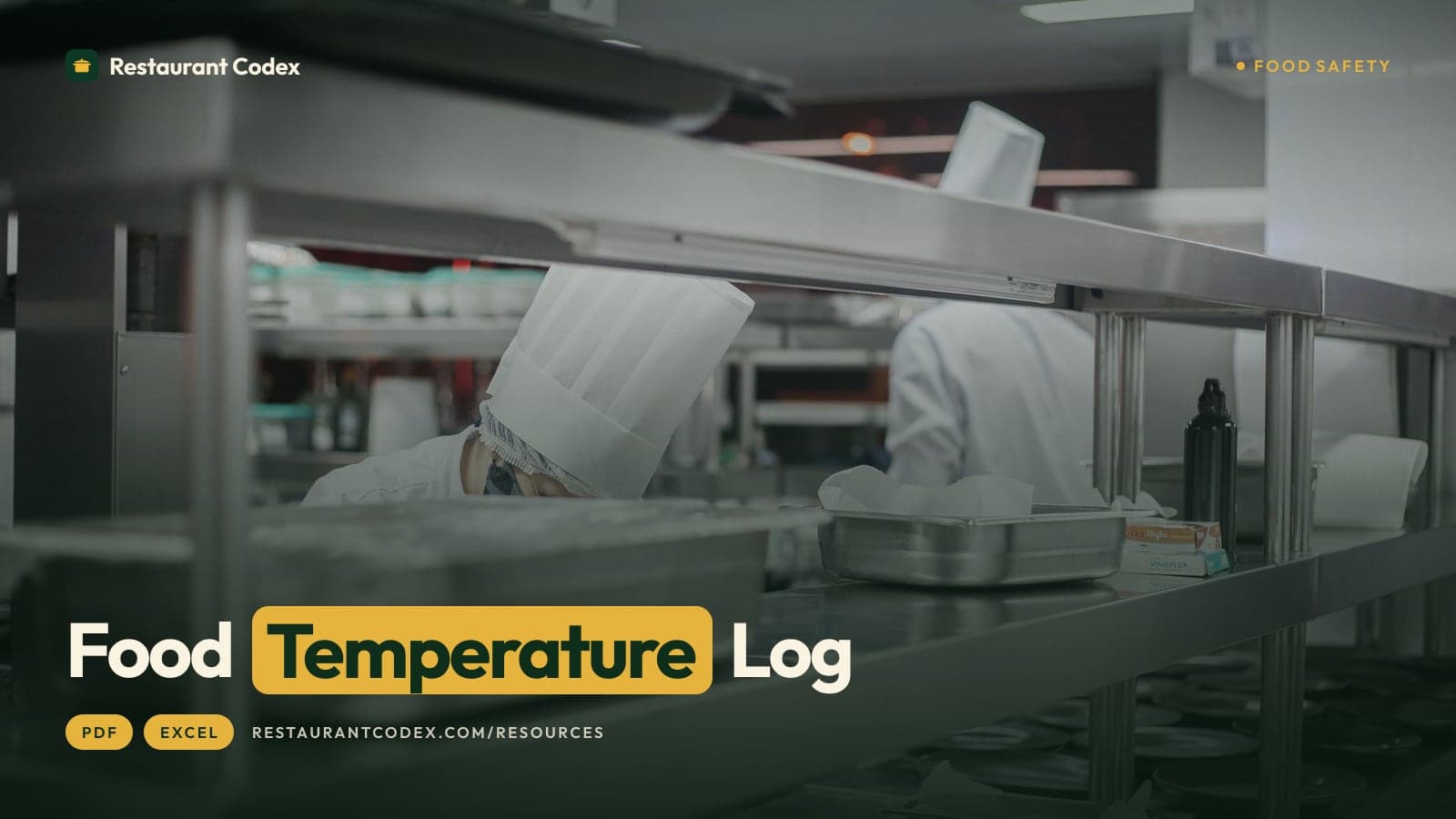
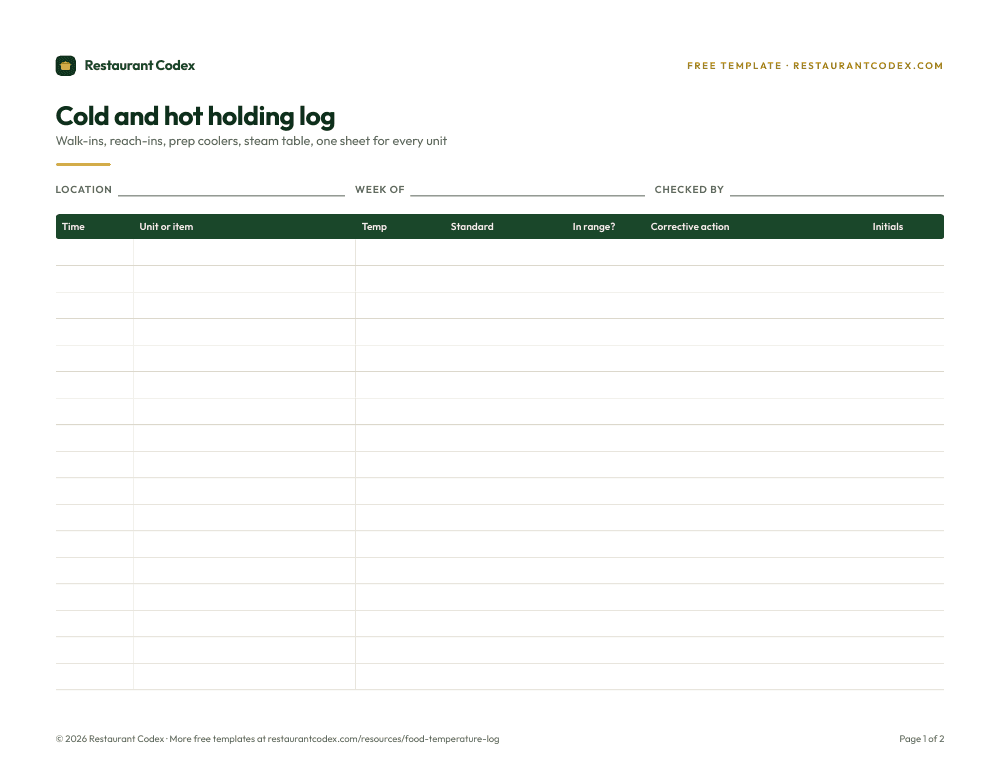
Keep these records for at least twelve months; the standard doesn't set a retention period for a restaurant, so confirm with your local sanitary authority if your state asks for longer.
What do you check if a verification visit could show up tomorrow?
If a visit could show up tomorrow, check first what an inspector reviews in the first few minutes: the handwashing sink stocked with soap and towels, refrigerators at 7°C or below with a working thermometer, and ice in a covered container, served with a scoop rather than bare hands.
- Refrigerators and freezers with a visible, working thermometer, reading 7°C or below on the cold side (5.2.5, 5.5.2).
- Hot-held food on the line above 60°C, cold ready-to-serve food at 7°C or below (7.3.3).
- Potable water and ice in smooth, washable, covered containers; ice served only with a scoop or tongs (7.4.5, 7.4.7).
- The day's log of free residual chlorine in the water (5.8.1).
- Pest control certificate or record, with the sanitary license number visible (5.10.11).
- Raw material with a current expiration date, and no signs of thawing on anything frozen (5.6.7).
- Cloths and rags kept separate by area: food-contact surfaces, prep tables, dining tables, floors (7.5.10).
- No one working in direct food contact with a cough, diarrhea, fever, or a visible hand wound (5.12.1).
- Hair tied back, short unpolished nails, no jewelry, on anyone preparing food (7.6.2).
- Bathrooms clean, stocked, not used as storage (5.9.7).
- Pesticides stored separately, in a restricted-access area (5.10.10).
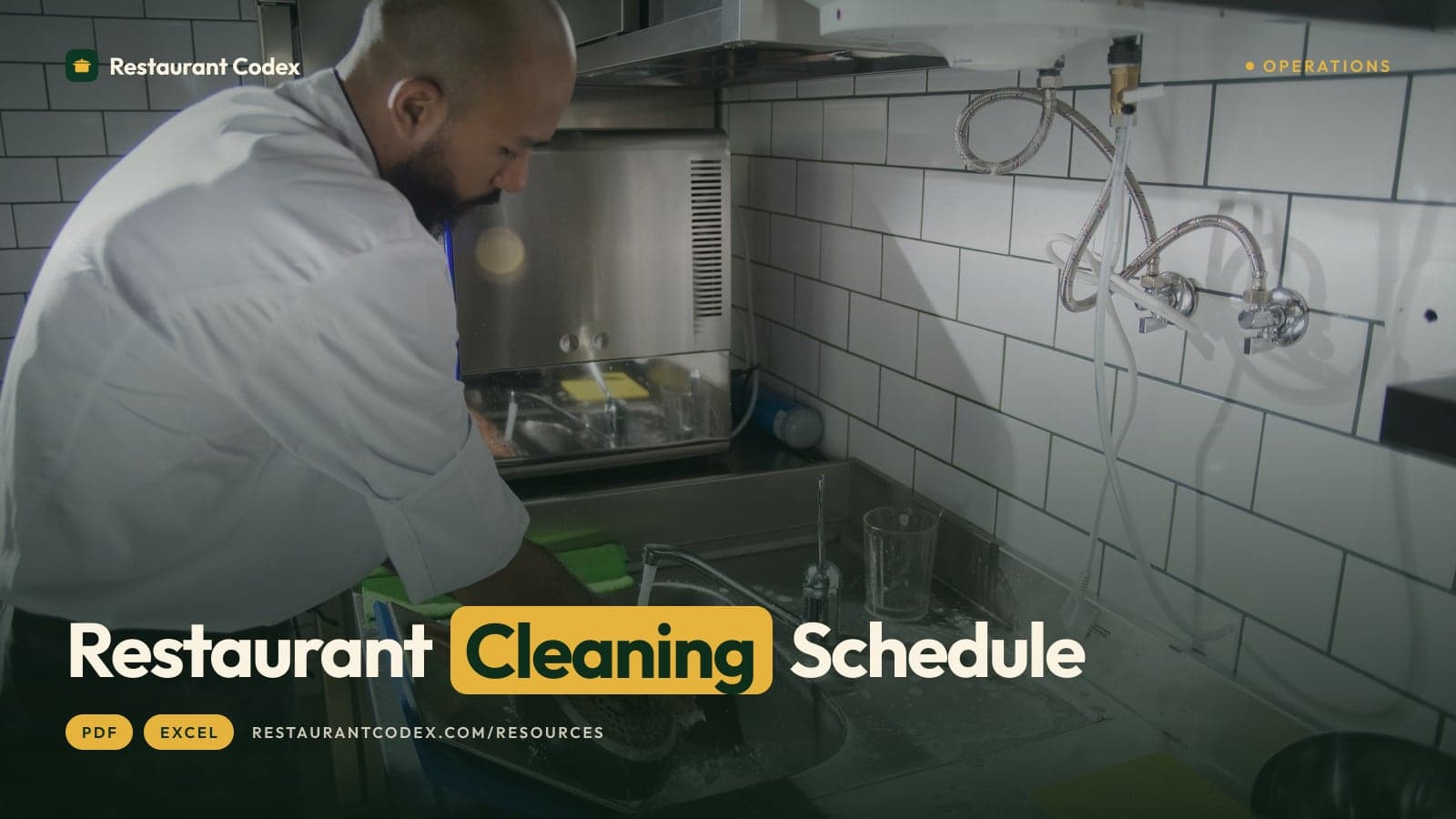
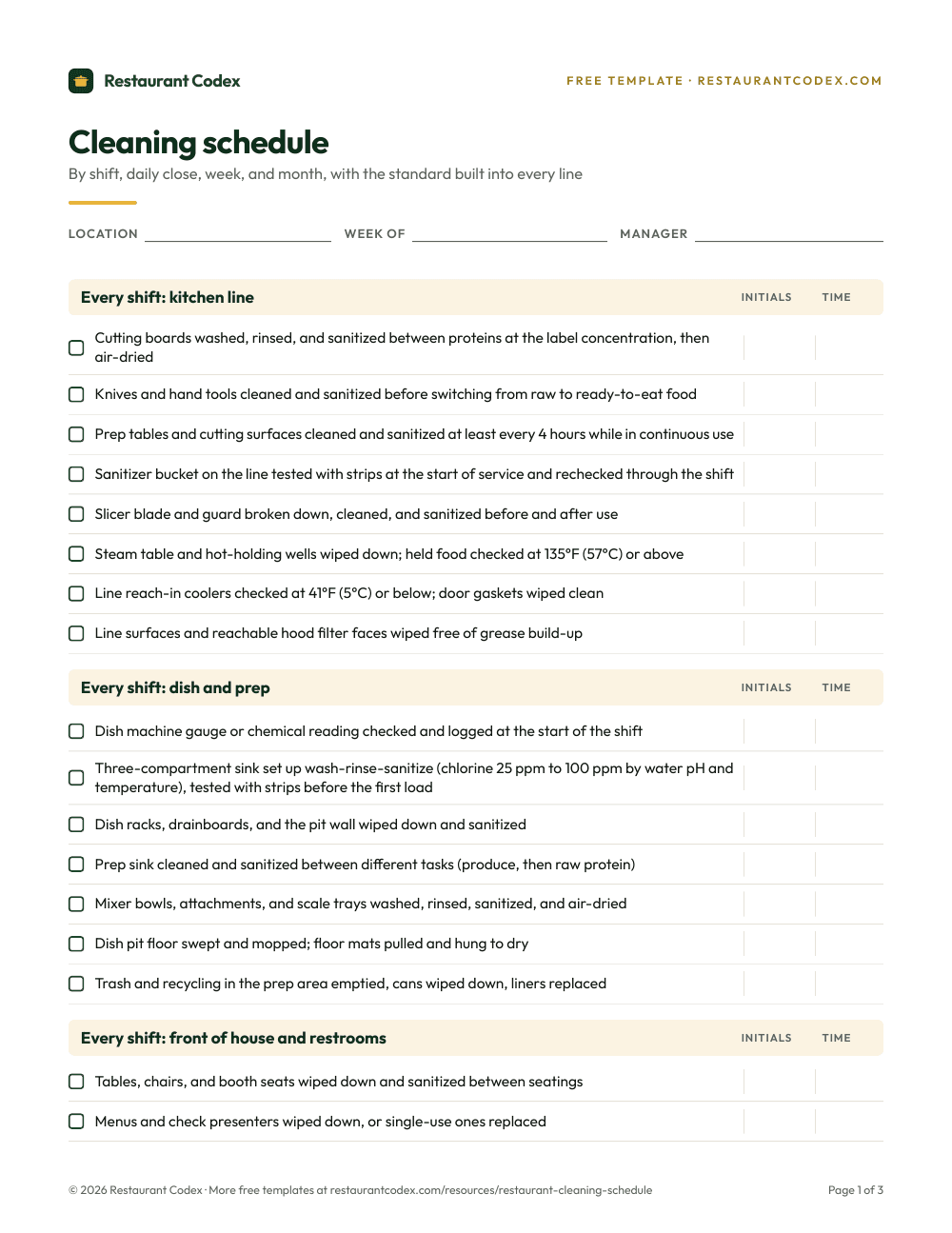
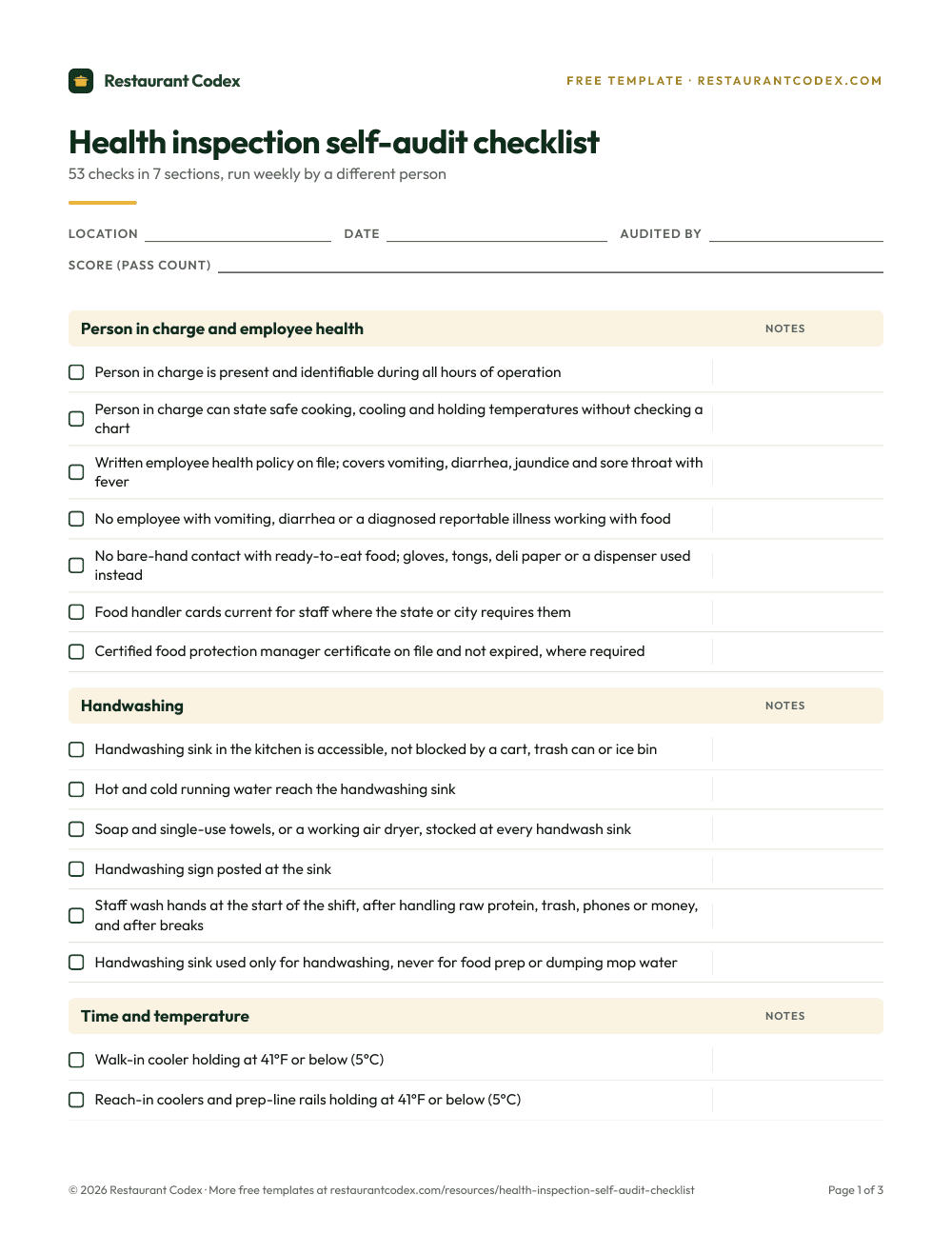
None of these items depend on knowing in advance that someone's about to walk in. It's what your kitchen should look like on an ordinary Tuesday at eleven in the morning, and it's exactly what a weekly self-audit, run by someone other than that shift's manager, catches before an inspector does.
How do you keep the same NOM-251 evidence across locations?
One set of numbers, applied the same way in every kitchen, is the part a single location doesn't have to think about and a multi-unit group can't operate without. Headquarters sets the standard, 7°C for refrigeration, 60°C for hot holding, the three cooking ranges, the same chlorine-log and pest-control format, and doesn't touch anything else. Each location's manager adapts what equipment they actually have, where the log lives, and how the walk-through changes with the size of their kitchen.
What really changes with the size of the group is how the evidence gets checked. A scheduled check with a photo of the thermometer or the refrigerator and a logged time, at every location, answers a question a single-location owner can settle by walking the floor but a multi-unit operator can't: is this reading from today, or is it the same photo from last week? Without a photo and a time, a log is only as reliable as whoever filled it in remembers.
Pulling every location into one place is what turns a dozen separate logs into a pattern. One location missing a temperature point once had a bad afternoon. Three locations missing the same point the same week is an equipment or a training problem, and it's worth fixing across all of them at once rather than location by location as each one fails in turn. That's the same discipline that keeps a checklist from being filled in from memory instead of in the moment, and the same one that holds consistency across locations together beyond food safety.
Where Restaurant Codex fits here
Restaurant Codex turns the points in this guide into timestamped, photographed tasks on a phone: a temperature reading, the day's chlorine log, the pest control certificate filed where any manager can find it in seconds, not in a folder from last month. The Operations module runs the scheduled check described in the section above, with an alert when a reading falls outside the range you set, and the Knowledge Base holds the exact NOM-251 point next to the task that depends on it, so the standard and the work live in the same place.
What Restaurant Codex doesn't do is decide whether your kitchen meets NOM-251 or get you Distintivo H. That's still a call for whoever knows your menu, and the job of the sanitary authority or an accredited verification unit. What it does is make sure that when that visit arrives, the last thirty days of evidence are complete, timestamped and photographed, on one screen, at every one of your locations.
Restaurant Codex
The same checklist, on every phone, with photo proof
Restaurant Codex runs this template as a live task with timestamps, photos and one view across every location. Bring it to a 30-minute working session and we'll show you how it would run across your locations.
By the Restaurant Codex team
Written with operators who run multi-location restaurant groups. Reviewed against the FDA Food Code and the sources listed below.
Sources
- Diario Oficial de la Federación, NORMA Oficial Mexicana NOM-251-SSA1-2009, Prácticas de higiene para el proceso de alimentos, bebidas o suplementos alimenticios (March 1, 2010)
- ContrataBien.mx, El Distintivo H no es obligatorio. La NOM-251 sí
- FDA Food Code 2026: cold holding, hot holding, two-stage cooling and reheating of TCS food