Why do restaurant standards slip after a strong opening?
Restaurant standards slip after a strong opening because the discipline that opening week runs on lives in people and habits instead of a written document, so it erodes through small exceptions that nobody ever schedules time to reverse. Opening week has an energy most restaurants never get back: the owner is on the floor every night, the recipe cards are brand new, the founding crew trained together off the same playbook, and everyone is watching everyone else work. None of that is a system. It's a temporary alignment of attention, and attention runs out long before the lease does.
Ask around and you'll hear the same complaint in different words. "Every restaurant I have worked in starts out strong, but then the standards slowly slip," is a line that turns up again and again on restaurant management forums, and the replies underneath tend to agree instead of arguing with her. That's not really about any one restaurant. It's what happens to any standard that only lives in people's heads instead of in a document somebody actually checks against.
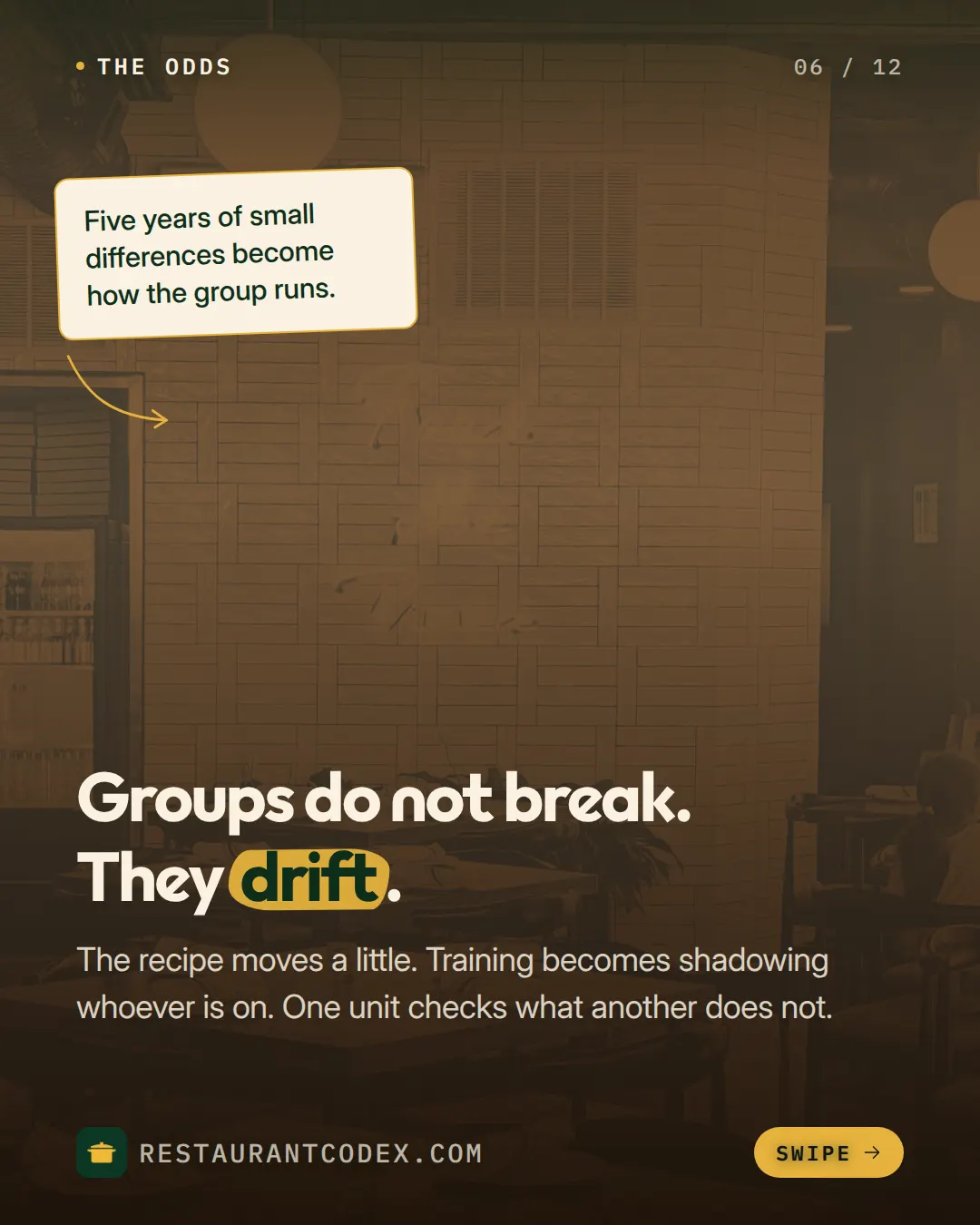
The mechanisms behind it are specific enough to name, not vague. A founding employee leaves and takes an unwritten method with her. A one-time substitution never gets reversed. A portion creeps up or down a spoonful at a time. A checklist turns into initials nobody reads. Prep gets shortened once during a rush and stays shortened. A new manager inherits a kitchen with no written record of what "right" used to look like. A vendor changes a spec and nobody on the floor was told to flag it. None of those is dramatic alone, and every one is survivable on any single night. Stacked over eighteen months, they add up to the whole explanation for a restaurant that opened great and now just gets by.
Why does losing the founding crew hurt standards the most?
Losing the founding crew hurts standards more than any other single event because the knowledge that made opening week work was never separated from the people who had it, so their exit takes the only working copy of the standard with them. Food service carries a total separations rate near 65% a year, close to double the 43% average across every industry the federal government tracks (BLS, Job Openings and Labor Turnover Survey; FRED, JTS7200TSR). At that pace, the crew that trained together on day one is mostly gone by the restaurant's first anniversary, and whoever replaced them was trained by whoever happened to still be around, not by the original standard.
Replacing one of those people is expensive on paper before it's expensive in practice. SHRM puts full replacement cost at 50% to 200% of a role's annual pay, a range the organization frames around what it calls "the myth of replaceability," the assumption that a departing employee's knowledge just transfers to the next hire because the job title stayed the same (SHRM, The Myth of Replaceability). It doesn't transfer on its own. A sous chef quietly holding a sauce station together with three small unwritten adjustments doesn't hand those over in an exit interview, because nobody ever asked her to write them down.
What actually leaves isn't the labor hour. It's the judgment: why this station runs the fryer two minutes longer during a rush, why one vendor's chicken needs a different trim, why the walk-in door sticks and has to be pulled at a certain angle to seal. A new hire inherits the equipment and the recipe card. She doesn't inherit the corrections, because those were never written down anywhere except in the person who made them.
How does a one-time substitution become the permanent standard?
A one-time substitution becomes the permanent standard the moment nobody schedules the day it goes back to the original, so an emergency swap made under pressure quietly outlives the shortage that caused it. It starts small. The usual tomato supplier is short one week, a manager approves a substitute without telling the kitchen it's temporary, and three months later new hires are trained on the substitute because it's what's sitting in the walk-in and nobody remembers there was ever a different answer.
Portion creep works the same way in smaller steps. A scoop that's supposed to be leveled starts running heaping during a busy Saturday because nobody has time to level it under volume, a new cook copies what she sees rather than what the recipe card actually says, and six months later food cost is up two points and nobody can point to the single day it happened, because there wasn't one.
Vendor spec changes are the version nobody even notices happening. A supplier reformulates a sauce, changes a cut, or swaps an ingredient in a blend, and unless someone checks incoming product against the original spec sheet, the change ships straight into the kitchen. Allergen information moves the same way from outside the building: sesame became the United States' ninth major food allergen on January 1, 2023 under the FASTER Act, and a recipe card written before that date is wrong now, whether or not anyone on staff was ever told (FDA, FASTER Act: sesame as the 9th major food allergen). Nobody has to make a bad call for a standard to move. Somebody just has to fail to schedule the moment it moves back.
Why does a checklist turn into initials nobody reads?
A checklist turns into initials nobody reads once finishing the paper quietly becomes the job instead of proving the work behind it actually happened, and from that point on a perfectly filled-out sheet stops meaning anything. It usually starts under volume. A closer is genuinely too busy to walk the full list at 11:45pm, initials everything to get out the door, and nothing bad happens that particular night. Nothing bad happening is the trap. It teaches the whole team the sheet is theater, and the lesson spreads through a crew faster than any manager tends to notice.
A list that runs too long makes the problem worse, not better. A role's checklist with fifty items handed over once at 5pm doesn't get finished, it gets signed. A shorter list, tied to the actual moment in the shift when each item applies, has a real chance of getting read instead of just marked. The fix isn't more items. It's fewer items, each one with a time and a name attached.
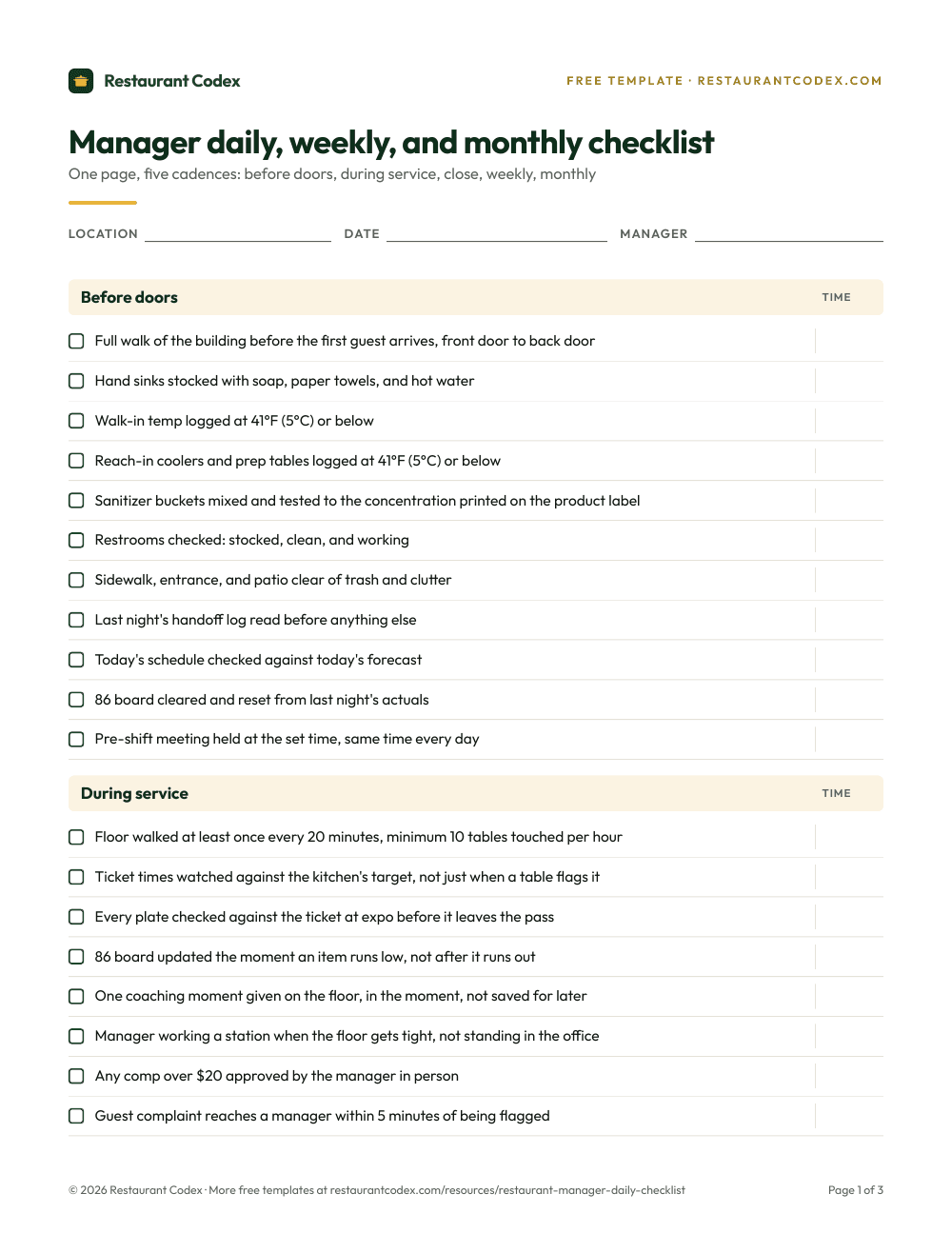
The tell is almost always in the pattern, not any single sheet. A closing checklist finished in exactly three minutes every night for a month either describes a flawless kitchen or one where nobody's actually walking the list anymore, and those two explanations look identical until somebody checks in person.
What actually holds a restaurant standard in place?
A restaurant standard holds when it's written down with a named owner and a review date attached, not when it's merely known by the people who happened to be there when it was set. "Cook the chicken thigh to temperature" is a fact almost everyone agrees with. "Portion the rice with the six-ounce scoop, leveled, logged on the prep sheet, reviewed by the kitchen manager every Friday" is a standard, because it names who's responsible and when it gets checked, and a fact without both of those attached is just something that used to be true.
The owner's name matters more than it sounds like it should. A standard nobody owns drifts because everyone quietly assumes someone else is watching it, the same way a closing task with no name on it turns into three people each assuming another one already handled it. The review date matters just as much, because a document without one gets written once and never revisited, while the actual kitchen drifts away from it a little at a time for a year or more.
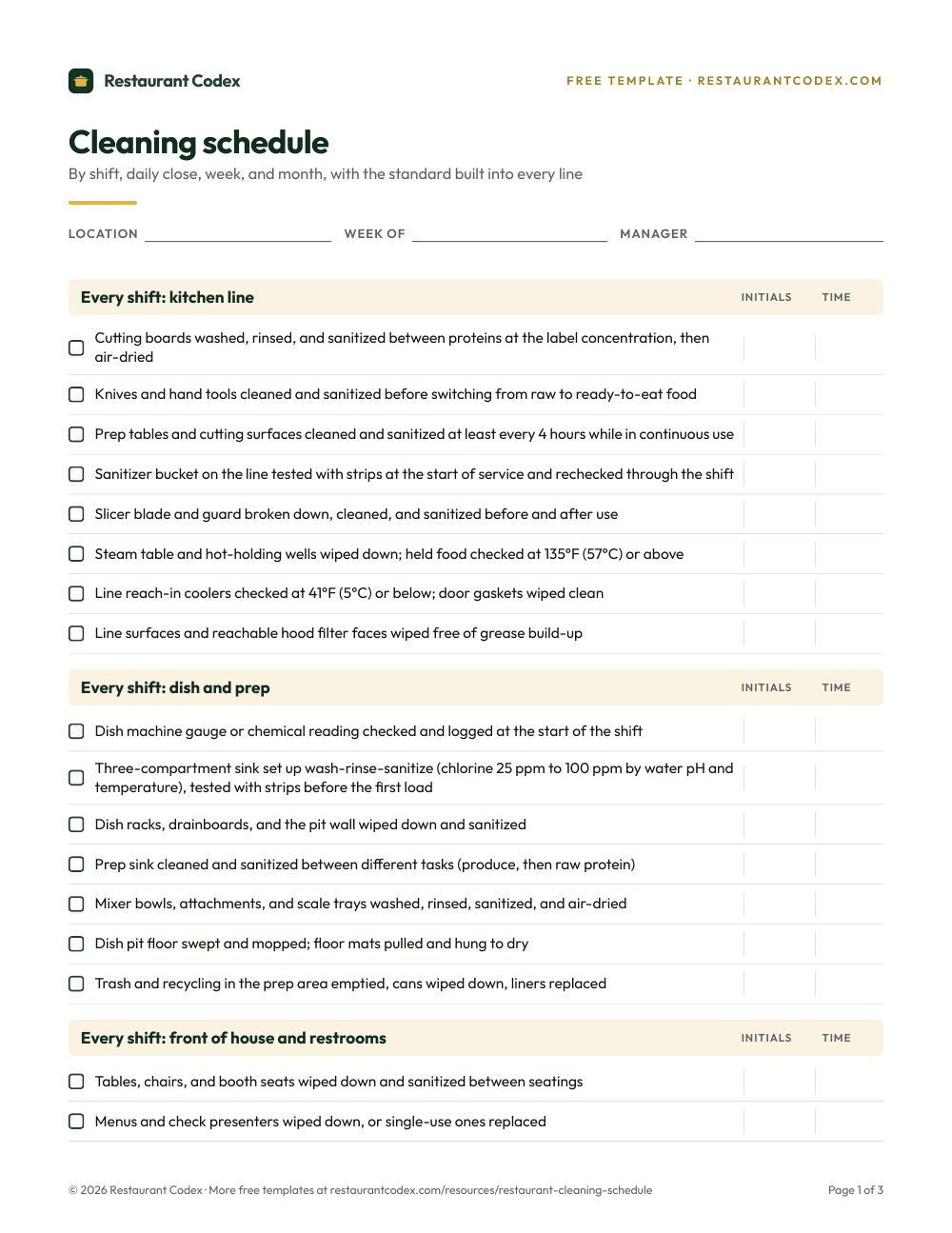
A cleaning schedule is a clean example of what this looks like done right: a ppm number instead of "clean the fryer," a name on every section instead of "staff," and a date it gets reviewed instead of a page that sits untouched since the day it was printed. The same shape works for a recipe card, a receiving spec, or a line check. Specific, owned, dated. Anything missing one of the three is a suggestion wearing a standard's clothes.
How do you catch a standard slipping before a customer does?
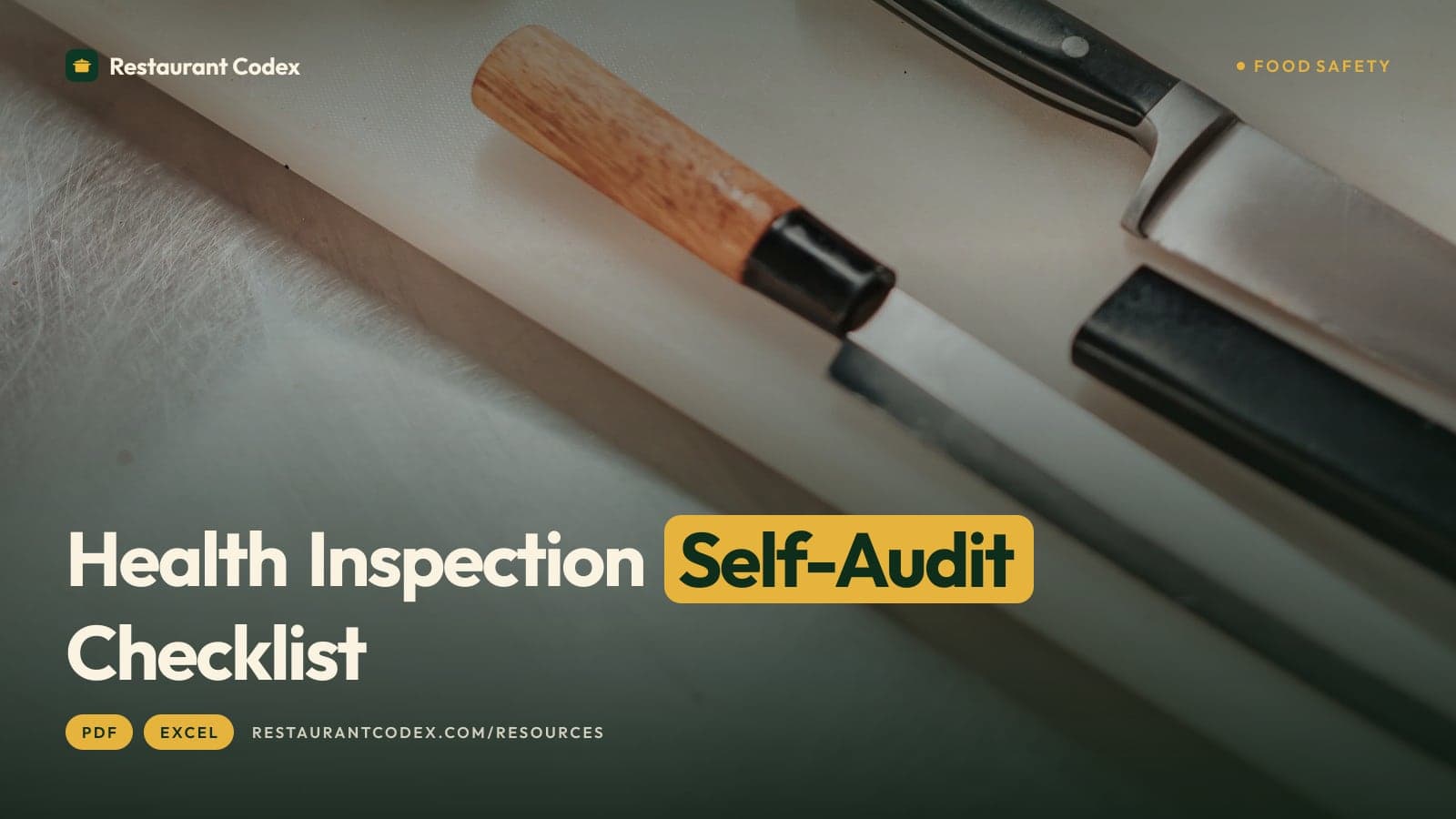
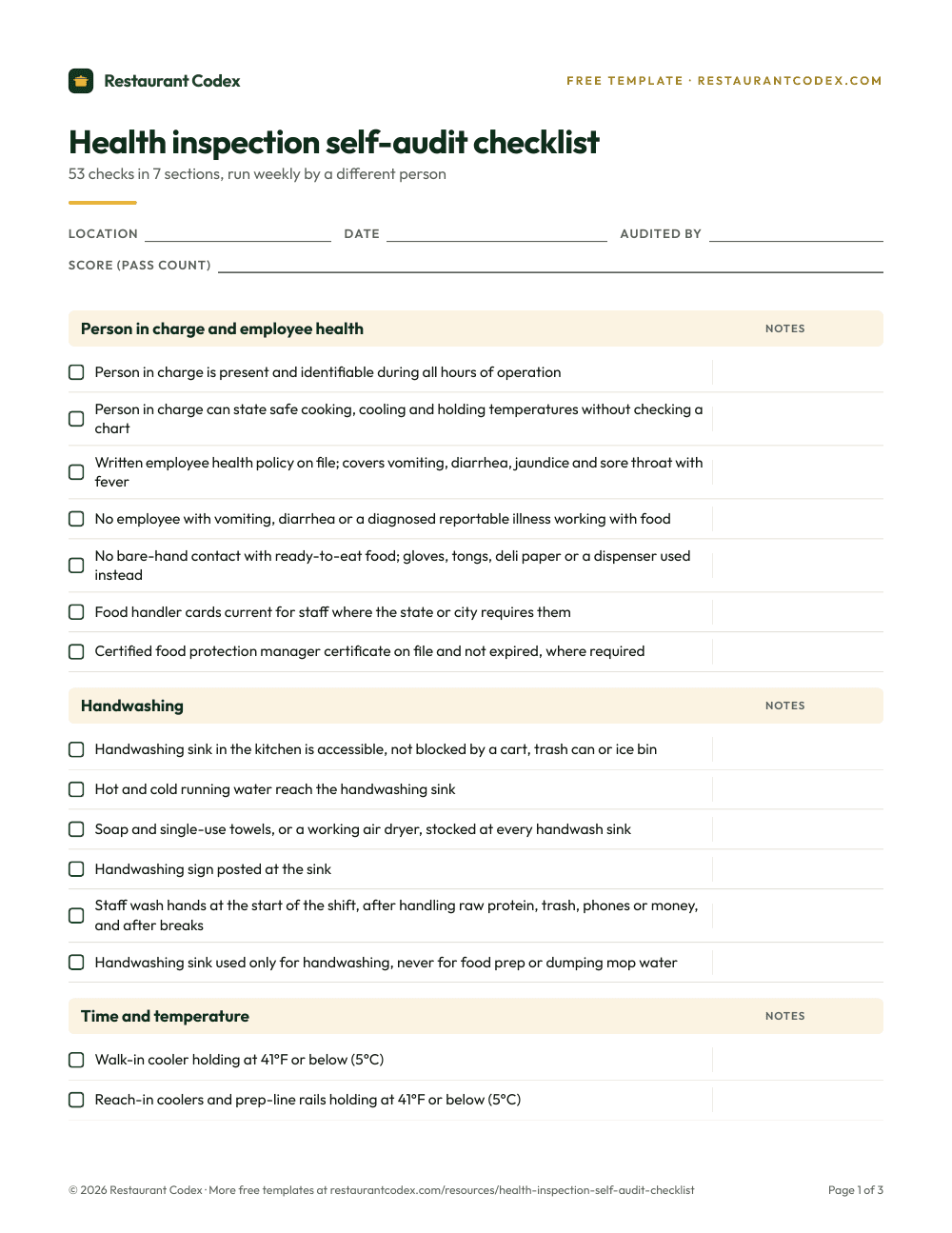
You catch a standard slipping before a customer does by running spot checks that leave evidence and by reading a weekly variance number instead of waiting for a complaint to surface the problem first. A spot check beats a scheduled inspection because it shows the kitchen on an ordinary night, not the night everybody already knew was coming. Cold holding has to stay at 41°F (5°C) or below (FDA Food Code, 2022), and a reading that comes back at 44°F and gets waved off as close enough, just once, is the same small decision that, repeated a few more times, turns into a permanent drift nobody actually decided on.
"Evidence" doesn't have to mean a formal audit. It means a timestamp, a photo, or a number written down at the moment someone checked, instead of a memory of having checked, reconstructed later at 11:59pm. A manager who can only say she's sure it's fine hasn't actually checked anything. A manager who can point to Tuesday's reading has.
The weekly number matters as much as the spot check does. Full-service labor runs a median 36.5% of sales, and profitable operators hold it closer to 34.2% (National Restaurant Association 2026 benchmarks, via Whipplewood). A single bad week rarely means much on its own. Three weeks drifting the same direction, on the same line item, almost always does, and a manager who only opens the P&L once a month won't spot the pattern until it's already a quarter old.
When should you retrain a team on a standard?
A team needs retraining the week a standard actually changes, a new vendor, a new menu item, a new hire, rather than on the next date a training calendar happens to land on. Calendar-based retraining isn't wrong. It's just not enough by itself. A quarterly refresher catches slow drift eventually, but it does nothing for the gap between the day a spec sheet actually changed and the day the calendar happens to circle back to that topic again.
Change-triggered retraining closes that gap by treating specific events as the trigger instead of the date. A new menu item, a reformulated ingredient, a piece of equipment that got replaced, or a hire who joined after the last full training pass, each of those is a known moment when the gap between what the team actually does and what everyone thinks they do quietly opens up. Each one is knowable in advance, which a calendar slot picked back in January never is.
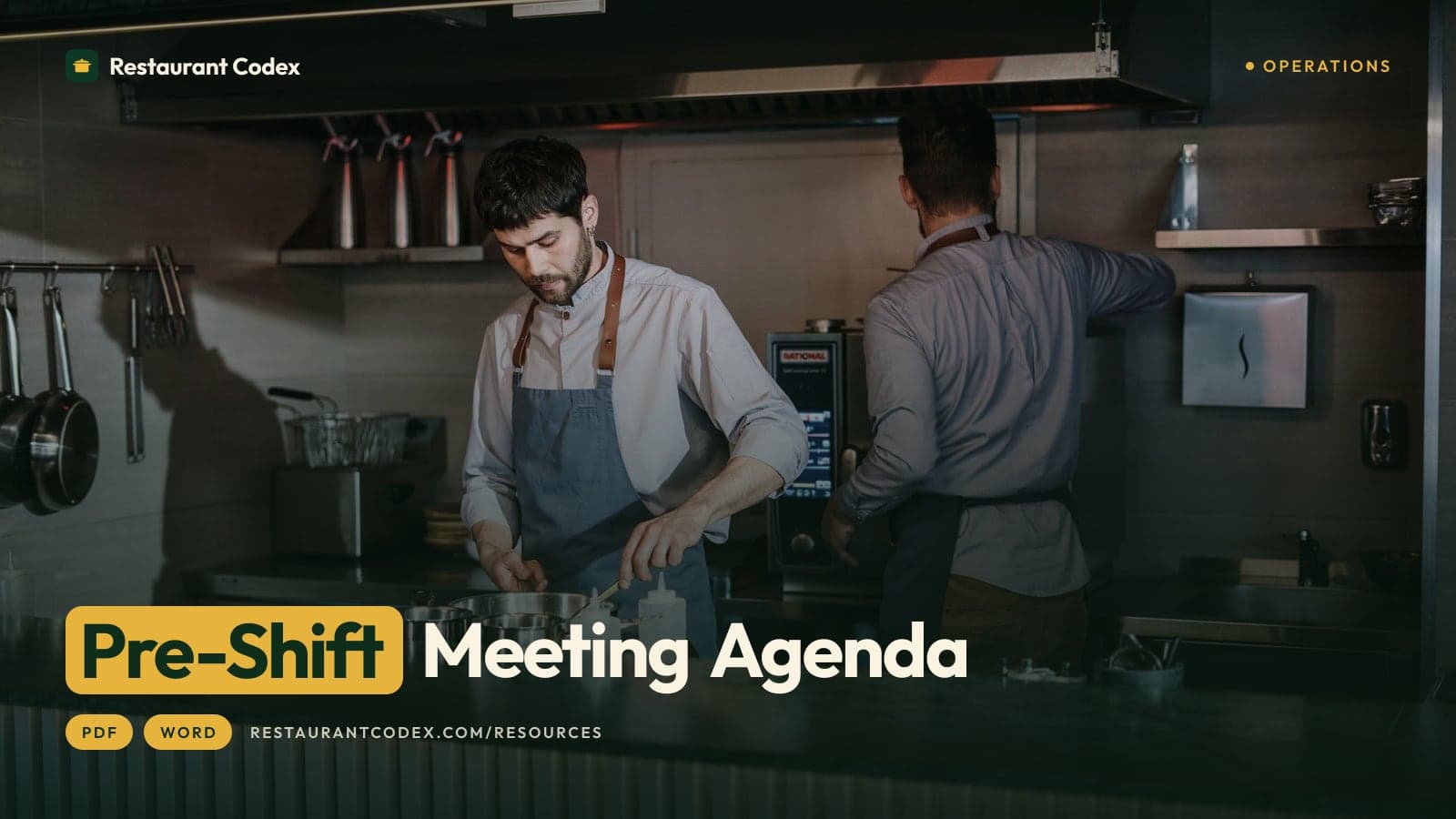
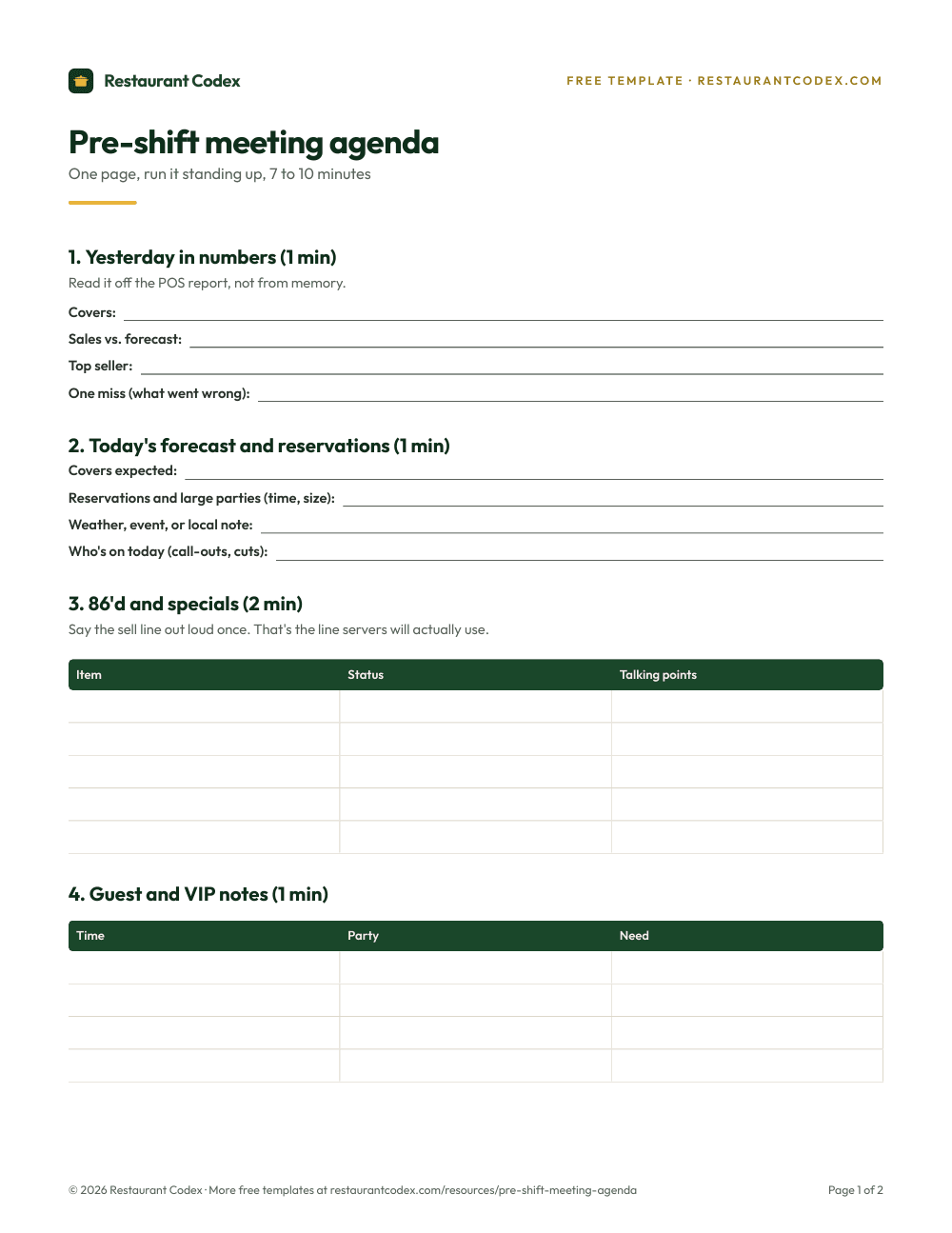
A short pre-shift note on the day a standard changes does most of the real work. It doesn't replace a full training session for something complicated, but it catches the ordinary case: a supplier switched, and tonight's line needs to hear it before the first ticket fires, not after a guest sends a plate back and asks why it tastes different than it did last month.
A new manager, six months in
Take a manager who starts six months after opening, hired to replace a GM who left for another concept across town. The kitchen still looks good on a walkthrough: clean, organized, service moving at a reasonable pace. What she doesn't have is any written account of why things are done the way they're done, because the standards that shaped opening week lived entirely in people who aren't there anymore.
She finds out the hard way, one decision at a time. Fryer oil gets changed on a schedule nobody wrote down, based on smell and color, a judgment call she now has to relearn through trial and error. A vendor substitution from eight months ago, made during a produce shortage, is still running, and she has no way to know it was ever meant to be temporary, because nobody logged the original decision. Portions have crept upward on two menu items, visible only once she pulls food cost against the original recipe card and finds a gap nobody around her can explain.
None of this is really anyone's fault. It's what happens to a standard that only ever existed as a shared understanding among people who have since moved on. A restaurant that writes its standards down while the founding crew is still there hands the next manager a reference. One that doesn't hands her an investigation instead.
How Restaurant Codex holds a standard after opening week
We built Restaurant Codex around the assumption that the people who set a standard will eventually leave, so the standard has to survive them on its own. A recipe, a spec, or a cleaning line gets a name, a review date, and a record of who last confirmed it, the same shape a well-written SOP already has, so a new manager inherits a document instead of a mystery. Spot checks leave a timestamp automatically, variance shows up on one screen instead of a spreadsheet nobody opens, and a vendor or menu change can trigger a retraining task the same week it happens instead of waiting for the next training cycle to come around. The shift rituals that hold a standard day to day still matter as much as they ever did. This is what keeps the standard itself from quietly turning into whatever the kitchen happens to be doing this particular week.
Restaurant Codex
The same checklist, on every phone, with photo proof
Restaurant Codex runs this template as a live task with timestamps, photos and one view across every location. Bring it to a 30-minute working session and we'll set it up on your real operation.
By the Restaurant Codex team
Written with operators who run multi-location restaurant groups. Reviewed against the FDA Food Code and the sources listed below.
Sources
- FDA Food Code 2022: cold holding, hot holding and two-stage cooling of TCS food
- FDA, FASTER Act: sesame as the 9th major food allergen (effective Jan. 1, 2023)
- FRED (Federal Reserve Bank of St. Louis), Total Separations Rate: Accommodation and Food Services (JTS7200TSR)
- SHRM, The Myth of Replaceability: Preparing for the Loss of Key Employees
- NRA 2026 restaurant financial benchmarks (labor cost), compiled by Whipplewood